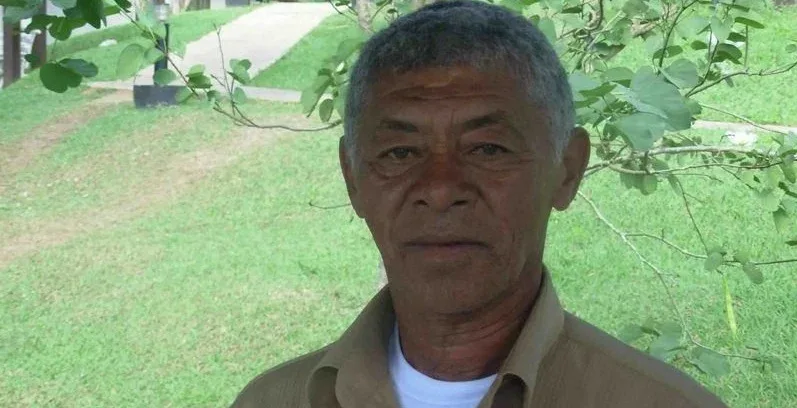
Master Barbosa was a pioneer of institutionalised capoeira in the Baixada Fluminense region, becoming a key figure in the capoeira community in Duque de Caxias, where he is remembered as one of the pillars of this tradition.
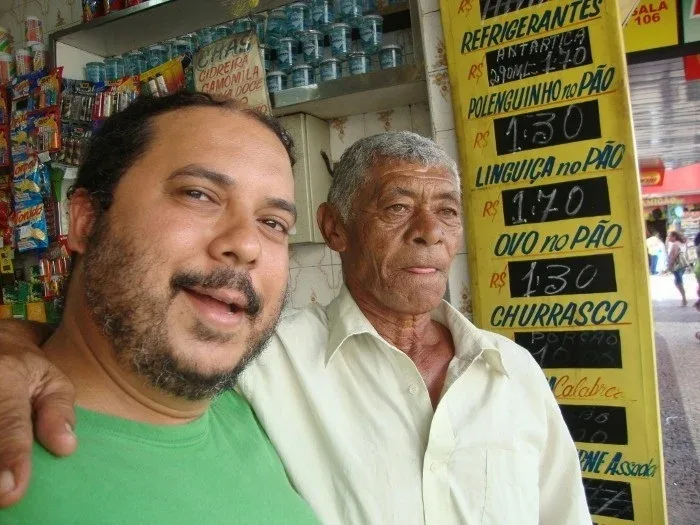
Jonas Rabelo (Master Russo de Caxias) and Marcelo Cardoso da Costa.
Master Barbosa exerted a great influence on the development of capoeira masters in the region. Although there are few written records of his career, his legacy lives on in the memories of veteran capoeiristas and in the training of several generations who helped to consolidate the Duque de Caxias style of capoeira from the 1970s onwards.
At a time when capoeira was still facing prejudice and had little institutional structure, Master Barbosa distinguished himself as a master and instructor, teaching capoeira techniques and opening doors for the art in private settings such as gyms, clubs and institutionalised venues.

Introducing the mestre
José Barbosa da Silva was born on 1 November 1945, the eldest of a large family of eleven children. His father was a local council employee, originally from São Lourenço da Mata in the Recife metropolitan area, and his mother was a housewife from Paraíba. He was brought up in the Bomba do Hemetério neighbourhood in the north of Recife, an area known for being home to several traditional frevo, samba, bois, caboclinhos and maracatus groups. We can imagine, based on the history of Pernambuco capoeira, that capoeiristas would march at the head of these groups to ‘clear the way’ and defend the group from rivals, whether through kicks or through their skill in the use of the knife or cudgels. Undoubtedly, tough capoeiristas from Recife, such as the legendary Nascimento Grande, Adama, Chico Cândido and Antônio Florentino, were very much in young Barbosas imagination1.
In the 1950s and 1960s, the Bomba do Hemetério neighbourhood transitioned from a rural area to a working-class neighbourhood, characterised by rapid, unplanned urban expansion, substandard housing and poor infrastructure – particularly in the areas of basic sanitation, transport and water supply. This period was marked by the peak of the rural exodus to the country’s major urban centres, São Paulo and Rio de Janeiro. And so it was that, at the age of thirteen, Barbosa and his aunt joined other people from the North-East and boarded the ‘Princesinha do Agreste’ bus bound for São Paulo, in search of better opportunities in life.
In the capital of São Paulo, more specifically at Luz Station, Barbosa learnt to box because, as he put it, at that time “capoeira didn’t exist, because it was all… I don’t even know how to put it… persecuted, it was kept hidden”2. At the age of fifteen, he decided to ‘set out into the world’ once more and came to Rio de Janeiro, running away from his aunt, because, “[…] I played loads of football; I wanted to play on Saturdays and Sundays, but she wouldn’t let me. I still play to this day.”3
Relying on the savings he’d set aside from working at his aunt’s guesthouse, he came to look for relatives in the Centenário neighbourhood, in the municipality of Duque de Caxias. He worked in various jobs, including at a bakery, as an upholsterer and in administrative roles, as well as serving in the Air Force, where he was part of the police force within that branch of the Armed Forces.
According to his account in an interview, Barbosa first came into contact with capoeira on the sands of Copacabana beach, in Rio de Janeiro, even before becoming a pupil of Artur Emídio. He also recounts that, from 1965 onwards, when he moved to the suburb of São João de Meriti, he took lessons from Valdir Sales. We can therefore see from the master’s recollections that he experienced capoeira both in its free and intuitive form and in its institutionalised form.
In an interview given to the Museu da Pessoa in 2007, Master Barbosa recounted his first encounter with the legendary Central Station Roda: “[…] the most intense capoeira I ever encountered was at Central do Brasil; it was all about malandragem [trickery], and I was just a young boy, so they wouldn’t let me take part. Then one day an old man said: ‘Let the boy have a go and see if he knows how to play!’ I hadn’t even been playing for two minutes when they kicked me out” 4. His impressions reinforce the theory that the Roda da Central was a sort of rite of passage for capoeiristas.
1Brasil, Dossiê, 2007.
The capoeira trajectory of Mestre Barbosa: importance and social context
Master Barbosa’s involvement in capoeira in the Baixada Fluminense region was extensive and varied. At that time, the municipality of Duque de Caxias was undergoing rapid urban expansion and experienced significant population growth, with a rich array of popular cultural expressions; however, capoeira still faced prejudice and police repression. Against this backdrop, Mestre Barbosa undertook pioneering work to organise the art form, transforming a practice that was often marginalised into an educational, sporting and cultural activity. According to his own account, he suffered various forms of repression during his early years of activity, but persisted in defending capoeira as a legitimate expression of Brazilian culture.
First, Barbosa taught at the Academia de Valdir Sales in São João de Meriti; he then also gave classes at the Academia 24 de Abril and the Center Clube. In 1969, he launched a project to teach capoeira in the Vila São Luís neighbourhood of Duque de Caxias. During this period, classes were held at the priests’ residence at the Church of Nossa Senhora da Conceição, to which he had access as a member of the youth group.
From 1970 onwards, his long association with Academia Líder began; this was where his students from the other establishments where he taught would gather, whether from the 15th Military Police Battalion in Duque de Caxias, or from his classes in Vila São Luís or from São João. In the master’s own words: “At one point, I had a group of around 50 or 60 students [meeting] at Líder.” 5 His Capoeira Regional group even took part in the Interclass tournament which, as he explained: “lasted a month and a half and was a competition bringing together academies registered with the Rio de Janeiro Boxing Federation and other academies from other tournaments. We came fourth!”6 In this way, Mestre Barbosa made a significant contribution to the training of future capoeiristas in the region, including the masters Russo de Caxias, Peixe and Velho.
Barbosa emphasised the importance of researching capoeira and understanding the history of this tradition. He even enjoyed theorising about the different forms the art had developed: “[…] we have four types of capoeira, and I want this to be clearly understood! Let’s start with Estilizada! First comes Capoeira Primitiva; then Estilizada; Regional; and Angola – that is, from back to front: Angola, Regional, Estilizada and Primitiva”.7
In 1975, he opened a capoeira academy on Rua Professor Henrique Ferreira Gomes. Registered with the notary’s office as Academia Caxiense, it was known as the Associação de Capoeira Zum Zum Zum. However, over time, other activities had to be included in order to cover the costs of maintaining the premises.
Through o Zum Zum Zum, Master Barbosa became one of the leading pioneers of capoeira in the Baixada Fluminense, at a time when capoeira was fighting for its institutionalisation and recognition as a combat sport through the Brazilian Boxing Federation. As part of this process of formalisation, capoeira groups began to move into the private spaces of gyms, clubs, and cultural and social venues – benefiting from administrative infrastructure, student records, monthly fees, uniforms, and the formalisation of grading systems and movements.
Founded in the ‘heart’ of the city of Caxias, Mestre Barbosa’s academy transferred the teaching of capoeira – which had previously taken place only in a free and informal manner in public spaces – to a structured gym environment, creating a sort of ‘cradle’ for the professionalisation of capoeira and capoeiristas. The school became known for its distinctive technique of blending the mischievous spirit of traditional capoeira, which originated in the Northeast, with the urban dynamism required by the challenges of Rio de Janeiro’s roda.
Capoeira in the Street and the Academy
In his article on the 50th anniversary of the Caxias Roda, Heraldo Hb – a filmmaker, cultural organiser, writer and educator from Duque de Caxias – also draws a certain connection between Master Barbosa and the Caxias Roda.
According to the capoeiristas associated with Barbosa and Josias – who broke away from the formal structure of capoeira and pioneered the street capoeira movement in the town centre – financial issues triggered the split. The process of modernisation at the academy had an impact on the social and economic circumstances of students who could not afford the lessons8. For Master PQD, “[…] we started practising street capoeira because we had neither the space nor the means to run an academy”9. Some still sought alternative solutions, such as masters Peixe and Velho who, unable to pay for capoeira lessons at Master Barbosa’s academy, were responsible for organising the students’ registration forms and helping to clean the premises.10
Another factor that is thought to have fuelled the split was the emergence of a greater need to control the students. Master Rogério assessed this moment as follows: “[…] this breakaway group did not become a gym group, but a street group, which is a free system of organisation.”11 When asked why he was opposed to his students’ participation in the Caxias Roda, Barbosa explained it as follows: “It’s because—I don’t know if you’ve heard—but they used to play in shorts, beach shorts; there was no standard dress code”12 (Almeida, 2004, apud Russo de Caxias, 2005, p. 61). The mestre did, in fact, seem troubled by the lack of standardisation in capoeira and amongst capoeiristas.
Mestre Barbosa argued that it was necessary to assess the context of this rupture and everything that was happening on the political scene, as it was the era of the military dictatorship and of internal disputes within capoeira itself. He claimed that the main problem was that people from outside Duque de Caxias were coming – including capoeiristas acting as informants for the repressive regime – to the Roda de Caxias with the aim of stirring up trouble and persecuting capoeiristas.13
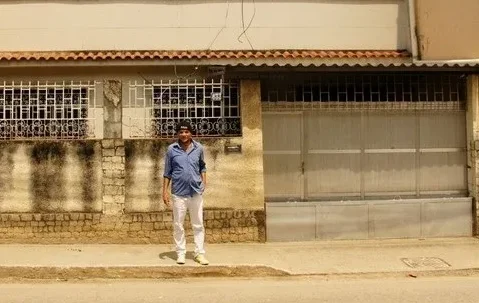
Master Russo de Caxias, an eyewitness to this story, confirms in this post the statements he has already made in his book."Capoeiragem: Expressões da Roda Livre".
He regrets the fact that these two mestres, Barbosa and Josias da Silva, remained opposed to the practice of capoeira on the streets, simply because they believed that the rodas we organised were at odds with the institutional structure they were seeking to establish. Mestre Russo reiterates: “I wish to make it clear here that I recognise the prominence this type of capoeira has achieved, and I do not wish to detract from the importance they held for the history of capoeiragem in Duque de Caxias; however, my perspective is different, as I was more interested in capoeira that was rooted in popular expression, spontaneity, improvisation and freedom. That is why I came up with the idea of the Roda Livre de Caxias and, nowadays, the Movimento de Integração Livre (MIL), to which I dedicate myself.” In the photo above: Mestre Russo in front of Mestre Barbosa’s house in Caxias.
Legacy and Ancestrality

Jonas Rabelois Mestre Russo from Caxias, or a ‘caretaker of capoeira’, as he likes to describe himself. He is from Rio de Janeiro and has strong ties to the municipalities of Duque de Caxias and Belford Roxo in the Baixada Fluminense region. He is a member of the Roda de Caxias and authored the book "Capoeiragem: Expressões da Roda Livre" ("Capoeiragem: Expressions of the Roda Livre de Caxias"), de 2005. He is currently one of the organisers of the Movimento de Integração Livre (MIL).
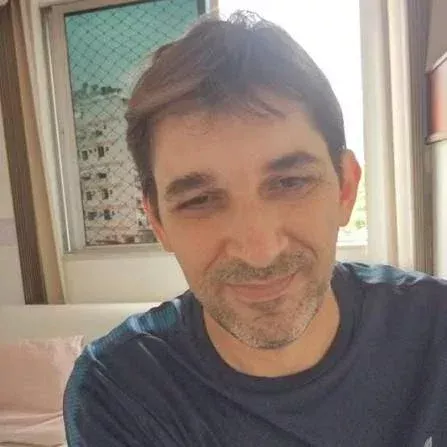
Marcelo Cardoso da Costa is a capoeira researcher, a resident of the suburbs, a lecturer in Sociology at the Federal Institute of Rio de Janeiro – Duque de Caxias Campus (IFRJ-CDuC) and holds a PhD in social memory (PPGMS/UNIRIO).
Ffurther reading:
Books and articles
Almeida, M. N.; T. L. Bartholo; e A. J. G. Soares. “Uma roda de rua: notas etnográficas da roda de capoeira de Caxias.” Revista Portuguesa de Ciência do Desporto 7, n. 1 (2013): 124–133.
Brasil. Dossiê: inventário para registro e salvaguarda da capoeira como patrimônio cultural do Brasil. Brasília: IPHAN, 2007
Costa, Marcelo Cardoso da. “A Baixada tem ginga: memórias, histórias e narrativas dos praticantes de capoeira no território da Baixada Fluminense.” Tese de doutorado em Memória Social, UNIRIO, 2024.
Marques, Alexandre dos Santos; Geraldo da Costa Filho. “A trajetória da capoeira em Duque de Caxias.” Revista Pilares da História, ano 10, edição especial (ago 2011): 79-90.
Marques, Alexandre dos Santos; Tania Maria da Silva A. Almeida. “Entrevista com o Senhor José Barbosa da Silva.” Revista Pilares da História, ano 6, nº 7 (maio 2007): 76-82.
Russo de Caxias, Mestre. Capoeiragem: Expressões da Roda Livre. Rio de Janeiro: Impresso, 2005.
Interviews
Barbosa, Itamar da Silva (Mestre Peixe). Depoimento em 25 de julho de 2023. Entrevistador: Marcelo Cardoso Costa. Duque de Caxias: IFRJ / CDuC. 2023. Gravação MP3 sonoro. Entrevista concedida ao projeto “A capoeira na Baixada Fluminense: memória e narrativas dos seus mestres” do IFRJ / CDuC, [s. p. ].
Maciel, Luís Carlos Terras Maciel (Mestre Lula). Depoimento em 6 de fevereiro de 2023. Entrevistador: Marcelo Cardoso Costa. Duque de Caxias: IFRJ/CDuC. 2023. Gravação MP3 sonoro. Entrevista concedida ao projeto “A capoeira na Baixada Fluminense: memória e narrativas dos seus mestres” do IFRJ/CDuC, [s. p.].
Marques, Alexandre dos Santos. Depoimento em 23 de abril de 2023. Entrevistador: Marcelo Cardoso Costa. Duque de Caxias: IFRJ/CDuC. 2023. Gravação MP3 sonoro. Entrevista concedida ao projeto “A capoeira na Baixada Fluminense: memória e narrativas dos seus mestres” do IFRJ/CDuC, [s. p.].
Silva, José Barbosa. Mestre José Barbosa da Silva: depoimento em 25 de maio de 2007. Entrevistadores: Tiago M. e Cláudia L. Vassouras, Rio de Janeiro: Museu da Pessoa. 2007. Gravação MP4. Entrevista concedida ao projeto “Memórias dos brasileiros”.
Seminário Caxias tem ginga. Capoeira viva na cidade: Políticas públicas e cenário atual, 2020a. [ S.I.]: Rádio Capoeira, 11 dez. 2020. 1 vídeo (2h13 min). Live. Disponível em: https://www.youtube.com/watch? v=2PGmNicOVo8. Acesso em: 12 mai. 2021.