Camafeu de Oxossi: A portrait of the famous berimbau player by Brazil’s Education TV.
By Gabriel Schulz
In November 1968, Queen Elizabeth II arrived in Salvador da Bahia. Surrounded by official pomposity, she allowed herself to be led through the narrow, noisy corridors of the Mercado Modelo (the closed market in the port area). It was in this setting of popular life that the British monarch encountered a samba circle led by a man with a unique personality: Camafeu de Oxóssi. There, in the heart of the market, he improvised verses that broke with protocol and elicited a rare enchantment from the Queen.
Her Majesty Queen Elizabeth
Your visit has honoured us greatly
In including in your itinerary
The Church of São Francisco and the
Mercado Modelo in Salvador.”1
The episode, narrated almost like a legend by the newspaper Correio da Manhã, helps to compose the portrait of Camafeu de Oxóssi: a popular myth in his lifetime, whose presence transcended everyday life and amazed those who encountered him. This is the figure that the archives of the Brazilian Educational Television Foundation allows us to reconstruct. His career combines capoeira, religiosity, music, resistance and popular culture, weaving together the history of 20th-century Bahia. This is certainly why Araken Távora chose him as a living monument, amid images of the ‘cultural territory of Bahia,’ to be presented in a fascinating interview with Jorge Amado in 1978, who spared no praise in describing Camafeu.2
1 Correio da Manhã, n. 23409 (August 9, 1969). A similar version was published by the magazine O Cruzeiro, n. 47 (1974): 6
2 Araken Távora, a renowned journalist, is cited by Jorge Amado as responsible for choosing the programme Os Mágicos to film the culture of Bahia.
Ápio Patrocínio da Conceição was born on 4 October 1915, on Rua do Gravatá, in the Nazaré neighbourhood of Salvador. The son of Faustino José do Patrocínio and Maria Firmina da Conceição, he built a connection with the popular life of the city from an early age. It was while begging for money at the door of the Olímpia cinema to watch the Camafeu Amarelo series that he received his famous nickname. He worked on the streets as a shoeshine boy, newspaper and shoelace seller. In 1945, he acquired his first stall in the Mercado Modelo, a space that would become his territory of life, cultural expression, but also his social and economic advancement.
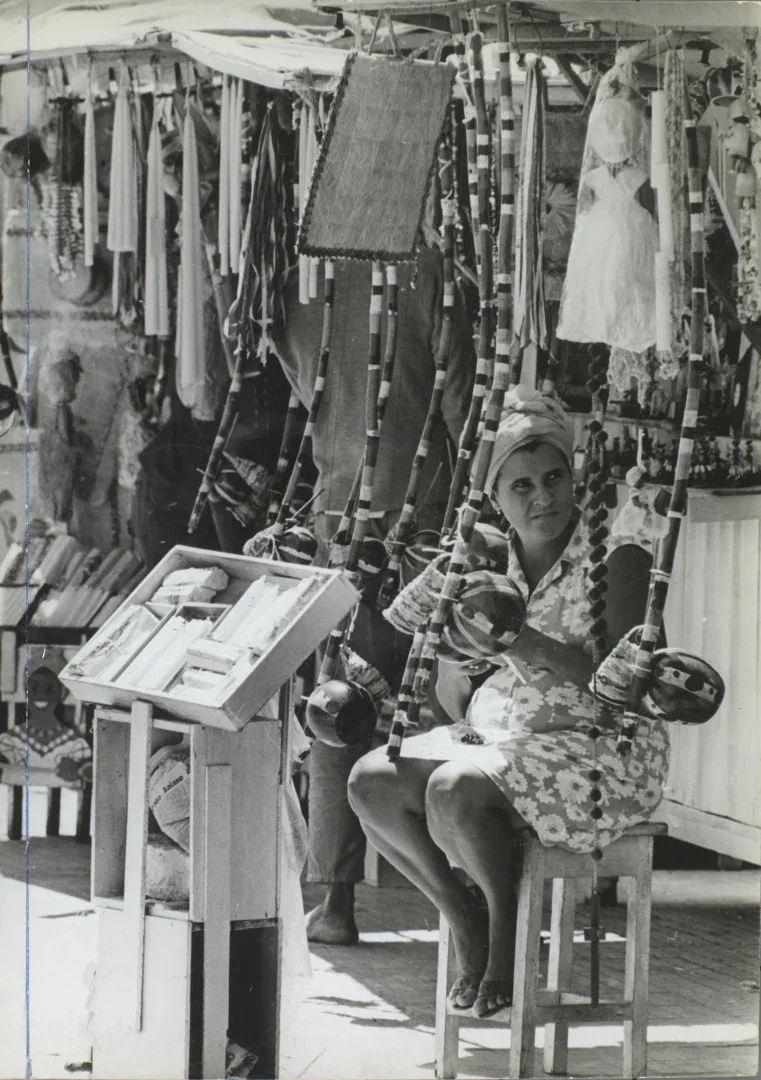
His path, however, was not restricted to the market. In 1961, he was one of the first students to enrol in the Yoruba language course at the Federal University of Bahia (UFBA), reaffirming his connection with the African roots of Bahian culture. A few years later, in 1966, he crossed the Atlantic to participate in the First World Festival of Black Arts in Dakar, alongside Mestre Pastinha, Clementina de Jesus, Elizeth Cardoso, Haroldo Costa, and others. This trip not only put capoeira and Bahian culture on the international map, but also established Camafeu as a living link between Africa and the diaspora.
In addition to being a musician and master of the berimbau, he recorded important albums for the memory of capoeira and Afro-Bahian music, such as Berimbaus da Bahia (1967), one of the first commercial albums of capoeira and candomblé. However, his life also had moments of great loss: in 1969, he saw his world turn to ashes in the fire at the old Mercado Modelo, where he lost everything. He rebuilt his life alongside his wife Toninha, opening a restaurant in the new Mercado Modelo in 1971.
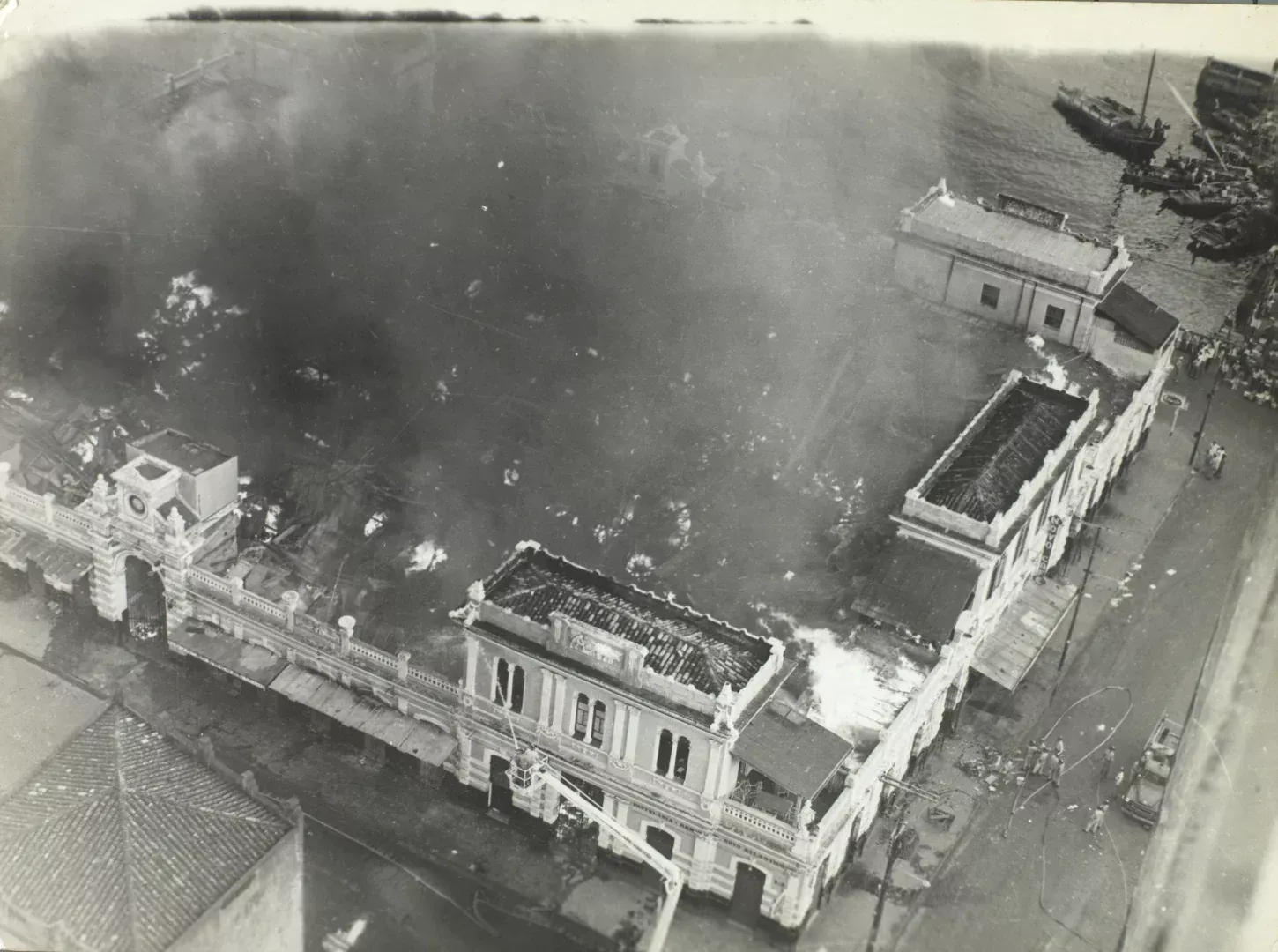
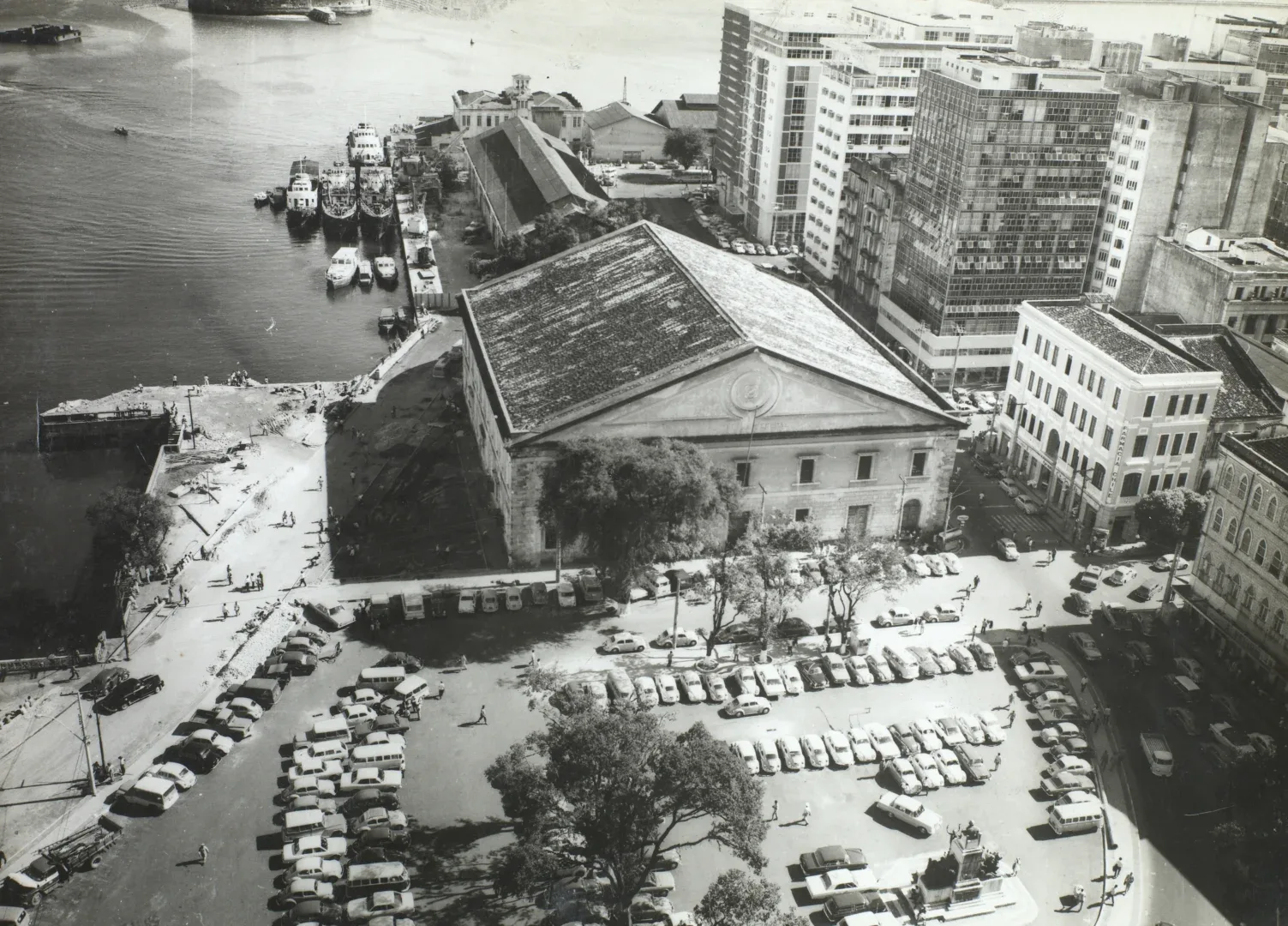
Between 1976 and 1982, he became president of the Filhos de Gandhi afoxé, one of the greatest symbols of carnival in Bahia, becoming even more recognised as a cultural and spiritual leader. His career crossed paths with names that also helped translate Bahia to the world — he met and spent time with artists such as Gilberto Gil, Dorival Caymmi, Carybé and, as the video shows, Jorge Amado — in a constant exchange between popular tradition and modern artistic production.
Created in 1967 by the military dictatorship, TVE was part of a project of national integration, propaganda, and educational reform promoted by the dictatorship.3 Thus, the representation of Camafeu de Oxóssi, and of scenes from Salvador in general, can be read within the policy of sociocultural valorisation, cultural dissemination and national integration, which were part of the objectives of TV Educativa. Television was seen as a weapon to prepare the people through cultural content of quality, that is, within the elitist and hygienist standards that characterised the dictatorship’s policies. On the other hand, TVE’s production, especially that part dedicated to folklore, popular culture and black culture, provides access to significant cultural and popular agents in recent Brazilian history.
This source, when viewed against the grain, exemplifies the cultural richness recorded and constructed through the lens of TVE. The video opens with Jorge Amado, who highlights the importance of the programme Os Mágicos in recording scenes from Salvador, as if it were a living snapshot of the city and its culture. After these images, the camera returns to the writer, who this time focuses on Camafeu de Oxóssi, giving voice to the character through a laudatory narrative.
3 Barros Filho, A Fundação Centro Brasileiro de TV Educativa.
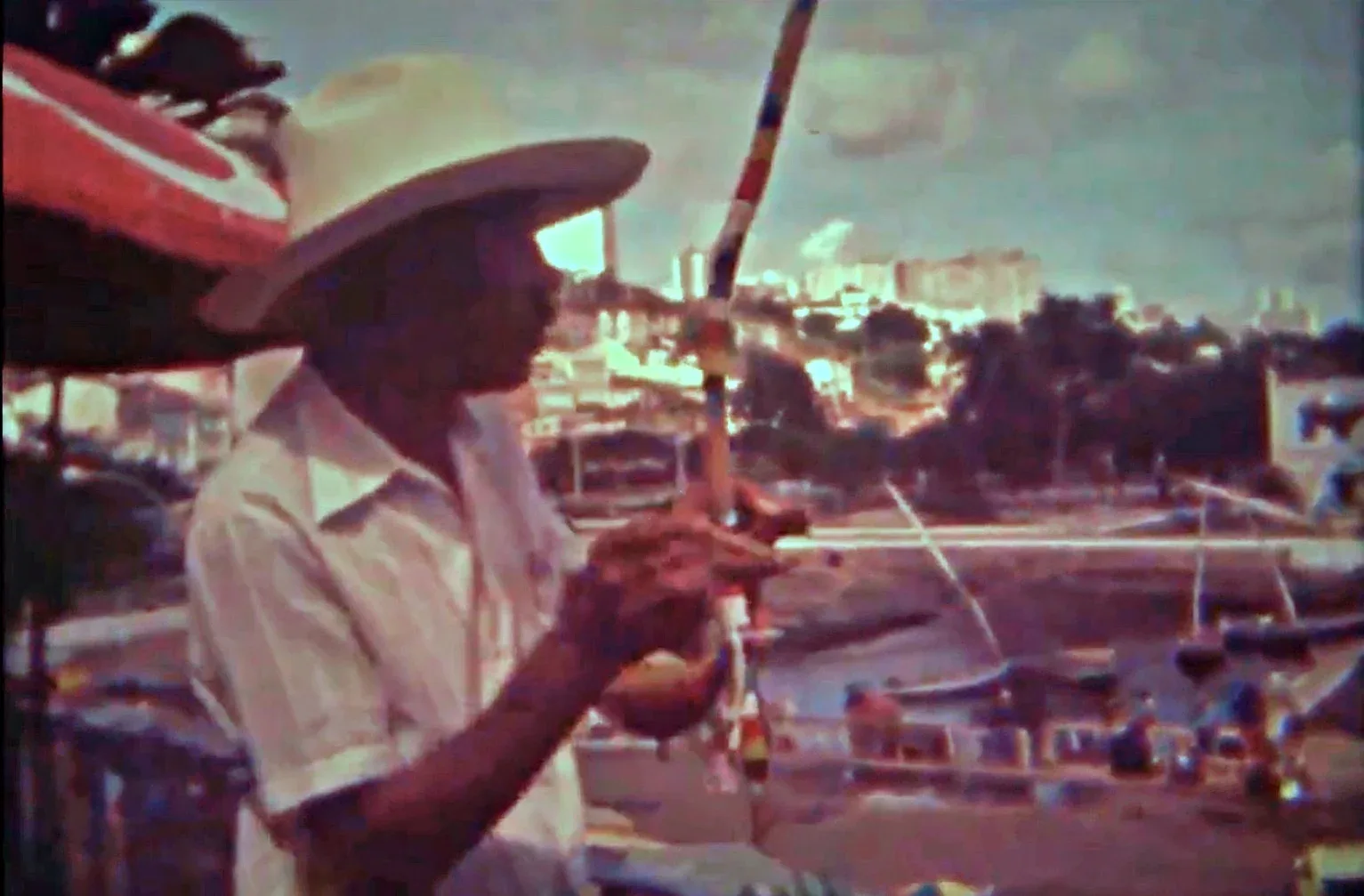
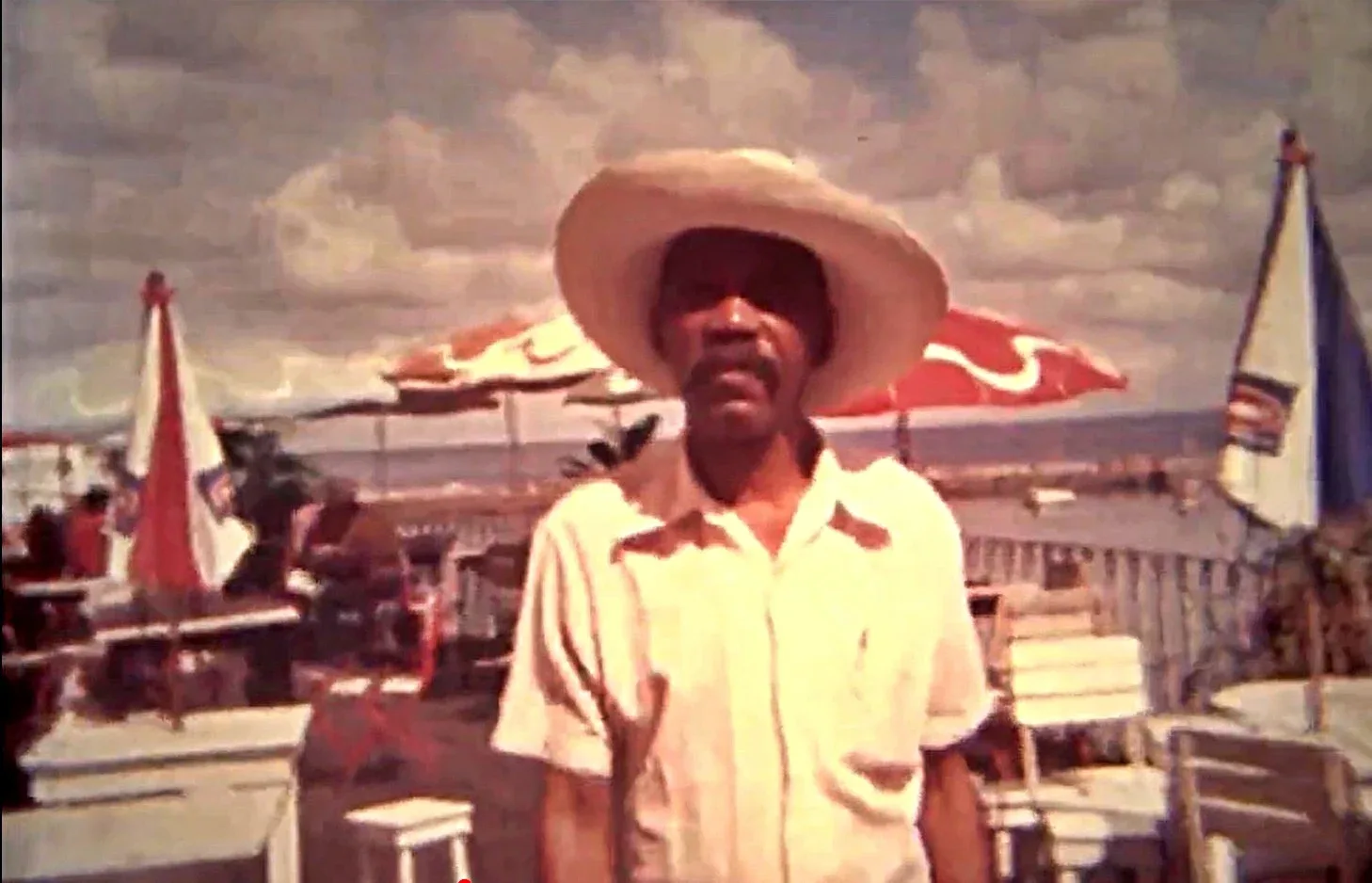
Depicted as a kind of tourist attraction, he walks through the spaces while smoking a cigarette and, at times, looks directly at the camera, establishing a silent dialogue with the viewer. The images, interspersed with beautiful dishes prepared by Bahian women, played out without sound, creating a contrast with the scenes of Jorge Amado, who is worthy of being heard, and the final scene. It is then that, deprived of his voice throughout the recording, Camafeu communicates through the berimbau, reaffirming the portrait painted by Jorge Amado: master of the instrument, lord of the Mercado Modelo, the greatest symbol of Bahian civilisation.4
Camafeu passed away on 26 March 1994, but he left behind much more than music and memories: he left the image of a simple man, a man of integrity deeply connected to his people.
4 The version of the video presented reverses this order, beginning with the scene of Camafeu with the berimbau.
Enjoy and watch the video:
Watch the episode of the show Os Mágicos featuring Camafeu de Oxóssi portrayed as an icon of Bahia’s culture.
This film was produced by the Fundação Centro Brasileiro de TV Educativa, in 1978.
This text was originally published on the website of the National Archives, on September 30, 2025.
Gabriel Schulz is a historian at the Research Division of the Brazilian National Archives. A student of Master Índio, he is also a teacher with the Capoeira Mata Verde group and has taught capoeira classes for the Education Secretariat of the Federal District (Brasília). He is the author of a master’s thesis at the University of Brasília entitled No Fio da Navalha e na Ponta do Lápis: a formação da Flor da Gente na imprensa ilustrada carioca (1860 – 1872) [On a Razor’s Edge and at the Tip of a Pencil: the formation of Flor da Gente in the illustrated press of Rio de Janeiro (1860 – 1872)]. He is currently a doctoral student in History at Federal Fluminense University (UFF, Niterói), with a thesis that analyses the relationship between capoeira in Rio de Janeiro and imperial politics in the second half of the 19th century.

References
Bibliography:
Amado, Jorge. Bahia de Todos os Santos : guia de ruas e mistérios 1912-2001. Rio de Janeiro: Editora Record, 2000.
Barros Filho, Eduardo Amando de. “A Fundação Centro Brasileiro de TV Educativa: debates, projetos e práticas à produção e difusão de conteúdos tele-educativos na Ditadura Militar, 1964-1981”. Tese de Doutorado em História, Universidade Estadual Paulista (UNESP, Assis), 2017.
Webites:
CAMAFEU DE OXÓSSI: Museu AfroBrasil, História e Memória, Disponível em: https://web.archive.org/web/20190209014740/http://www.museuafrobrasil.org.br/pesquisa/hist%C3%B3ria-e-mem%C3%B3ria/historia-e-memoria/2014/07/17/camafeu-de-ox%C3%B3ssi. Acesso em 10 de setembro de 2025.
CAMAFEU DE OXÓSSI, Wikipedia: Enciclopédia Livre: https://pt.wikipedia.org/wiki/Camafeu_de_Ox%C3%B3ssi#cite_note-museu-1. Acesso em 10 de setembro de 2025.
Periodicals consulted in the Hemeroteca Digital Brasileira:
Correio da Manhã (RJ), n. 23409, 09.08.1969.
A Manchete (RJ), n. 1055, 08.07.1972.
O Cruzeiro, Revista (RJ), n. 47, 20.11.1974.
Video:
BR RJANRIO FS.0.FIL.2260. http://imagem.sian.an.gov.br/acervo/derivadas/br_rjanrio_fs/0/fil/2260/br_rjanrio_fs_0_fil_2260_d0001de0001.mp4. Acesso em 10 de setembro de 2025.