Capoeira in Jamaica: “Banana Way Style – a film about the circulation of culture”.
By Roberto Pereira
Capoeira for foreigners, my brother, is rubbish! Brazilian capoeira, my friend, is deadly!”For at least two decades, the lyrics of this old song, very popular in the 1980s and 1990s, no longer correspond to reality when it comes to capoeira outside Brazil. Around the beginning of the 21st century, capoeira was already massively present in Europe and the United States. Among the pioneers in promoting and spreading the Brazilian black art were great masters such as Artur Emídio from Bahia, back in the 1950s, and Nestor Capoeira, (who recently passed away) in the mid-1970s.
Capoeira around the world
Since the pioneers, capoeira practitioners have headed for the most economically developed regions of the world, where money is worth more and where, for this reason, capoeira practitioners had the possibility of a better life. The search for better living conditions was undoubtedly the fundamental reason for the arrival, establishment and spread of capoeira throughout the world. Faced with a lack of government and business incentives in Brazil, where great names such as Mestre Pastinha and Bimba, to cite the most emblematic cases, suffered extreme hardship in their final years, the path was to seek other destinations.
In this process of capoeira’s internationalisation on its own, other regions of the world were left, so to speak, watching the ships go by. Who would be interested or venture to leave Brazil to teach capoeira in a poor country where all their efforts would bring no financial return? Leaving your country to face hardship elsewhere did not seem to make much sense; it would be better to stay at home.
As a result, less financially attractive areas of the world, such as poorer countries in Latin America, Central America and Africa, were left on the sidelines for some time and only more recently have begun to integrate into the process of internationalising capoeira in various ways.
Capoeira in Jamaica
This was the case, for example, in Jamaica, where the Brazilian martial art was introduced in the early 21st century, not by a Brazilian in search of better living conditions, but by a young German capoeira practitioner, Dennis Eckart, known as Contramestre Simpson, who at the time was only an instructor with the Cativeiro group. A little of this capoeira practitioner’s curious trajectory was discussed in an article published by Revista Afro-Ásia (UFBA, 2024) and recently became a short film recorded in Jamaica with testimonials from him and his disciples.

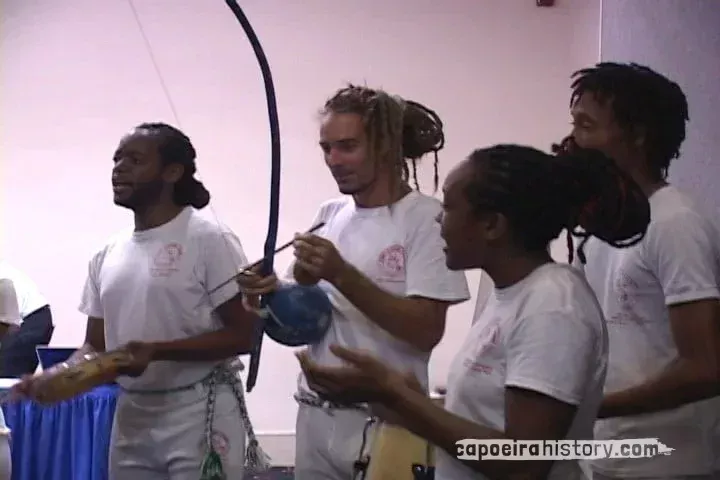
The contramestre Simpson with some of the oldest students from the Cativeiro da Jamaica group: Tarik (pandeiro); Simpson (berimbau), Rodane and Kara (in front).
The Eckart family: Dennis and his partner Collen, with their children Emma, Lukka and Lilli.
The film is an independent production, filmed between December 2019 and January 2020 in Jamaica and completed in 2024. That same year, it was released in Kingston at the headquarters of the Jamaican Ministry of Gender, Entertainment and Sport, with support from this Ministry, contramestre Simpson, the Cativeiro da Jamaica group and Steven Golding, president of the Universal Negro Improvement Association and African Communities League (UNIA).
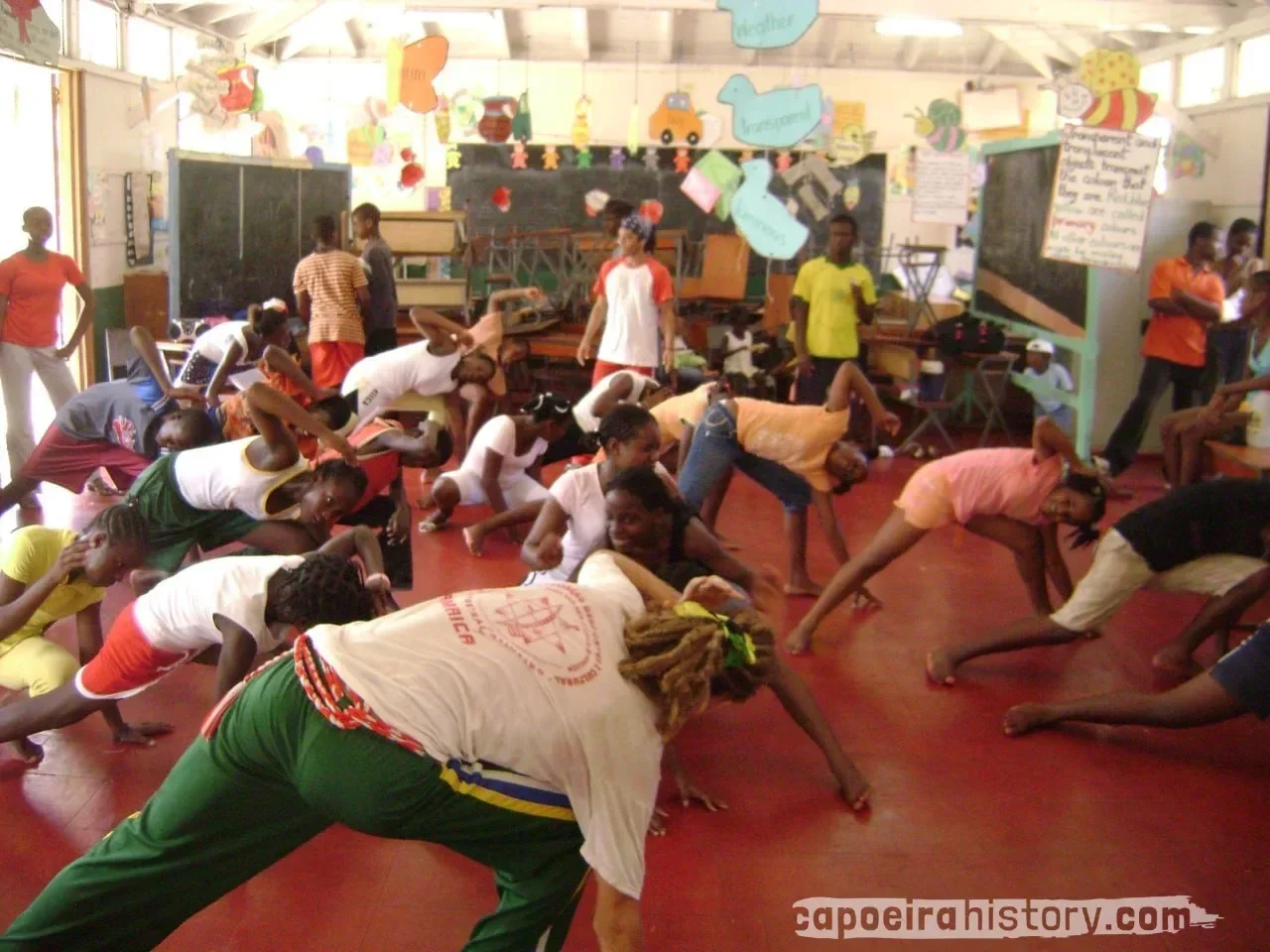
Contramestre Simpson teaching a class at a school in the maroon village of Charles Town, Jamaica.
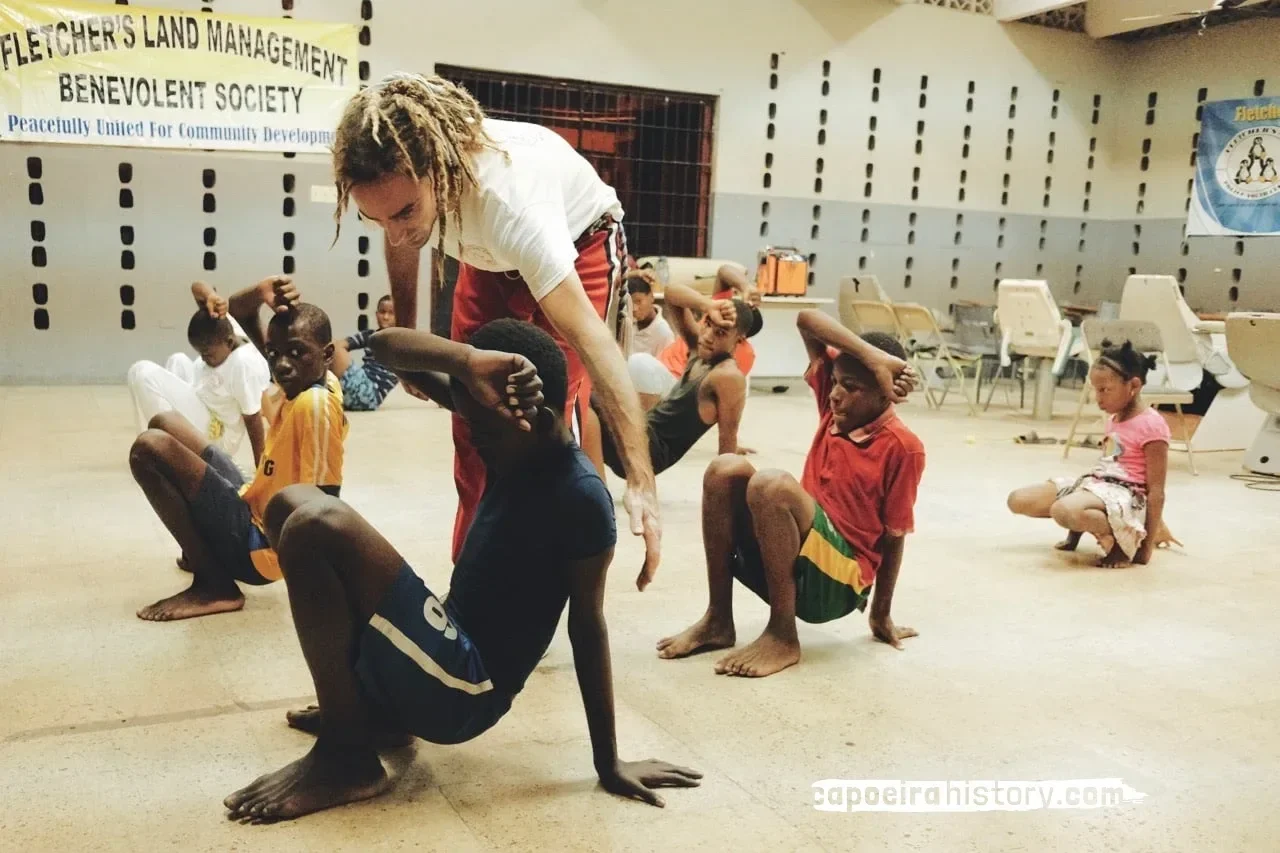
Classes at Fletchers Land focusing on education for non-violence.
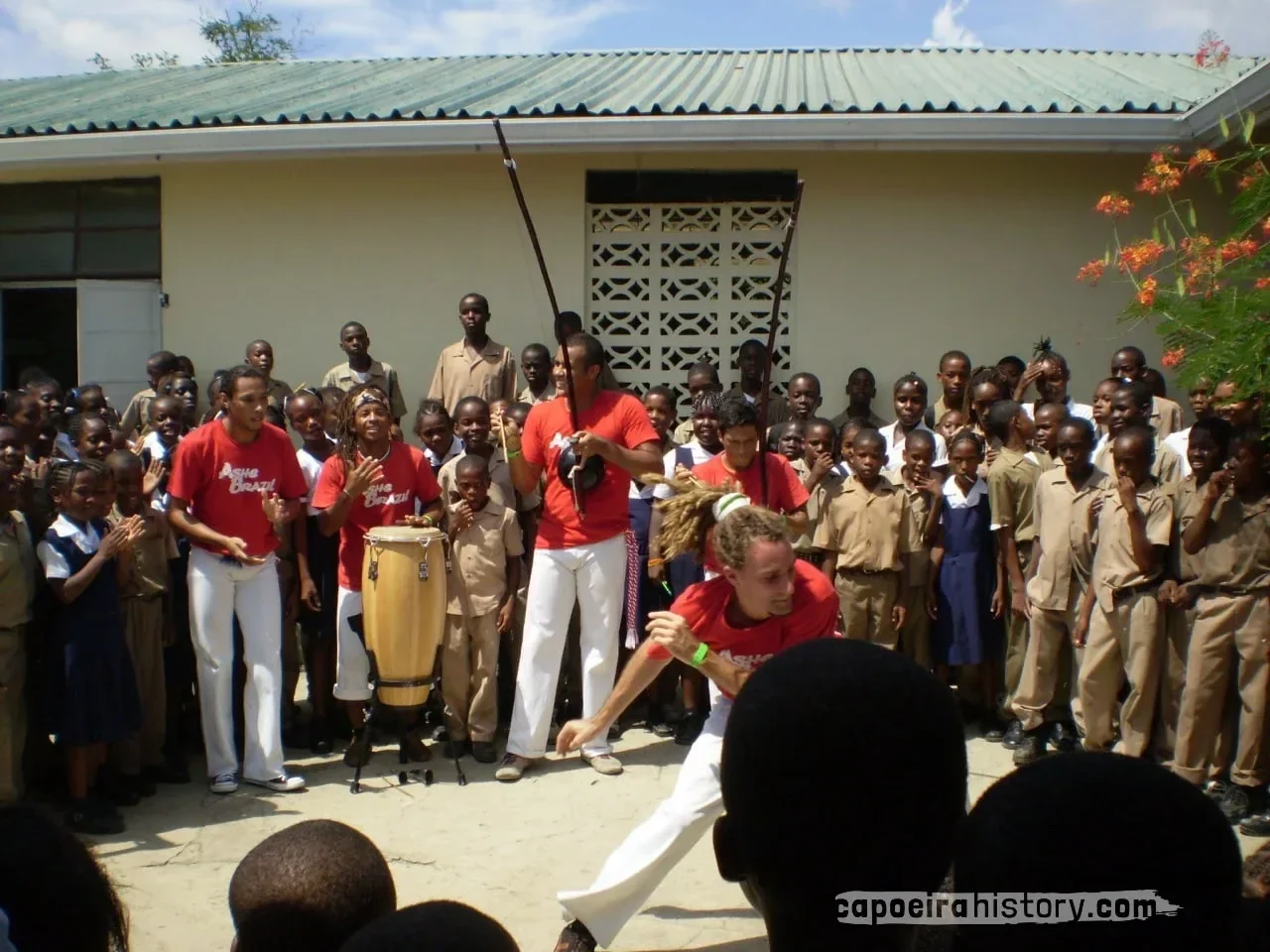
Students from a school in Negril watch a performance by the group Cativeiro. In the game, Carrapeta, B1, Capacete, Fofinho and Simpson.
Enjoy and watch the video:
Watch now! Banana Way Style, Roberto Pereira’s documentary about the arrival of capoeira in Jamaica.
Here ou can access the full article from Afro-Ásia magazine!
Read the article Black agency and the transnationalization of capoeira. The case of Jamaica, by Roberto Pereira, about his research on the expansion of capoeira in Jamaica.

Link to the file
(English version of the article)
Roberto Pereira is a documentary filmmaker, capoeirista and holds a PhD in Comparative History from the Federal University of Rio de Janeiro (UFRJ). He directed and scripted O Dono da Capoeira (2014); Do Ringue aos Palcos and O Jogo da Navalha (2023). He was a doctoral trainee at Harvard University’s Department of History, 2009.
is a documentary filmmaker, capoeirista and holds a PhD in Comparative History from the Federal University of Rio de Janeiro (UFRJ). He directed and scripted O Dono da Capoeira (2014); Do Ringue aos Palcos and O Jogo da Navalha (2023). He was a doctoral trainee at Harvard University’s Department of History: A capoeira do Maranhão: entre as décadas de 1870 e 1930 (São Luís: IPHAN-MA, 2019) and Rodas Negras: capoeira, samba, teatro e identidade nacional (1930 – 1960); preface, Flávio Gomes, (São Paulo, Perspectiva, 2023).

References
Roberto Pereira, “Agenciamento negro e a transnacionalização da capoeira. O caso da Jamaica”, Afro-Ásia, n. 69 (2024), DOI: 10.9771/aa.v0i69.55777, disponível em https://periodicos.ufba.br/index.php/afroasia/article/view/55777/34438, acesso em 17/11/2025.
The images are from the collection of Contramestre Simpson.

