Creating the DNA of a Mexican Martial Art:
Ancestry, Ethnicity and Mexicanidad in Xilam.
By George Jennings
Overview
Xilam (from Dzilam, literally, “to remove the skin” in Mayan) is a contemporary Mexican martial art developed by a rare female pioneer, Marisela Ugalde, who saw the need for a fighting and human development system to instil pride in a country that has historically discriminated against its first peoples. This article is based on my research (2011-2016) involving ethnographic fieldwork, a life history of the founder, in-depth interviews as well as documentary, interview and media analysis..
It introduces the technical makeup of Xilam within the historic context of Mexico as a modern nation that has experienced various stages of colonisation and post-colonial ideological development around its national identity, most notably the concept of mestizaje (ethnic / racial mixing). It points to Xilam as an example of a modern martial art created within and for modern Mexicans wishing to learn more about their ancestral heritage – both cultural and genetic – and what Mexicanidad (Mexicanness) could mean in the 21st century.
Mexico: A nation born out of the fall of empires
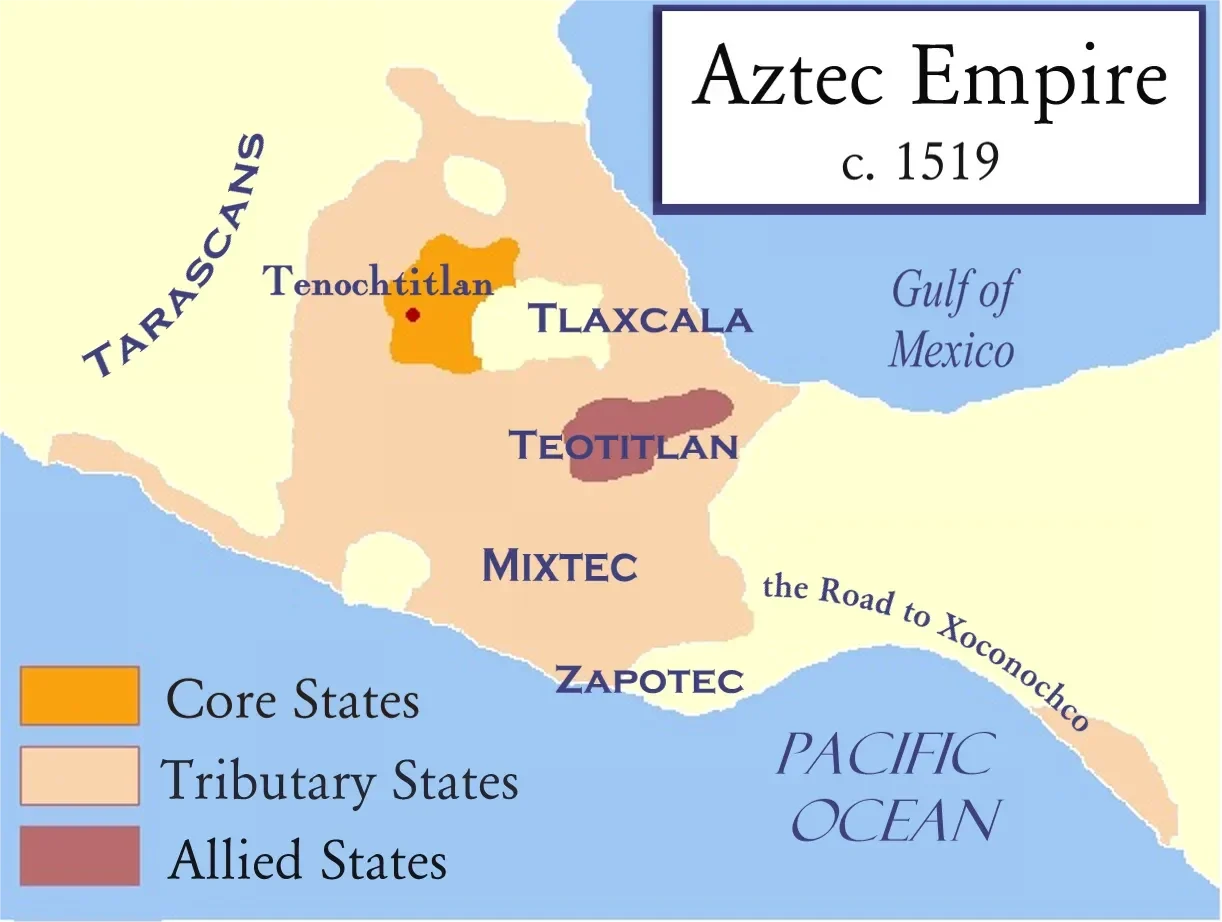
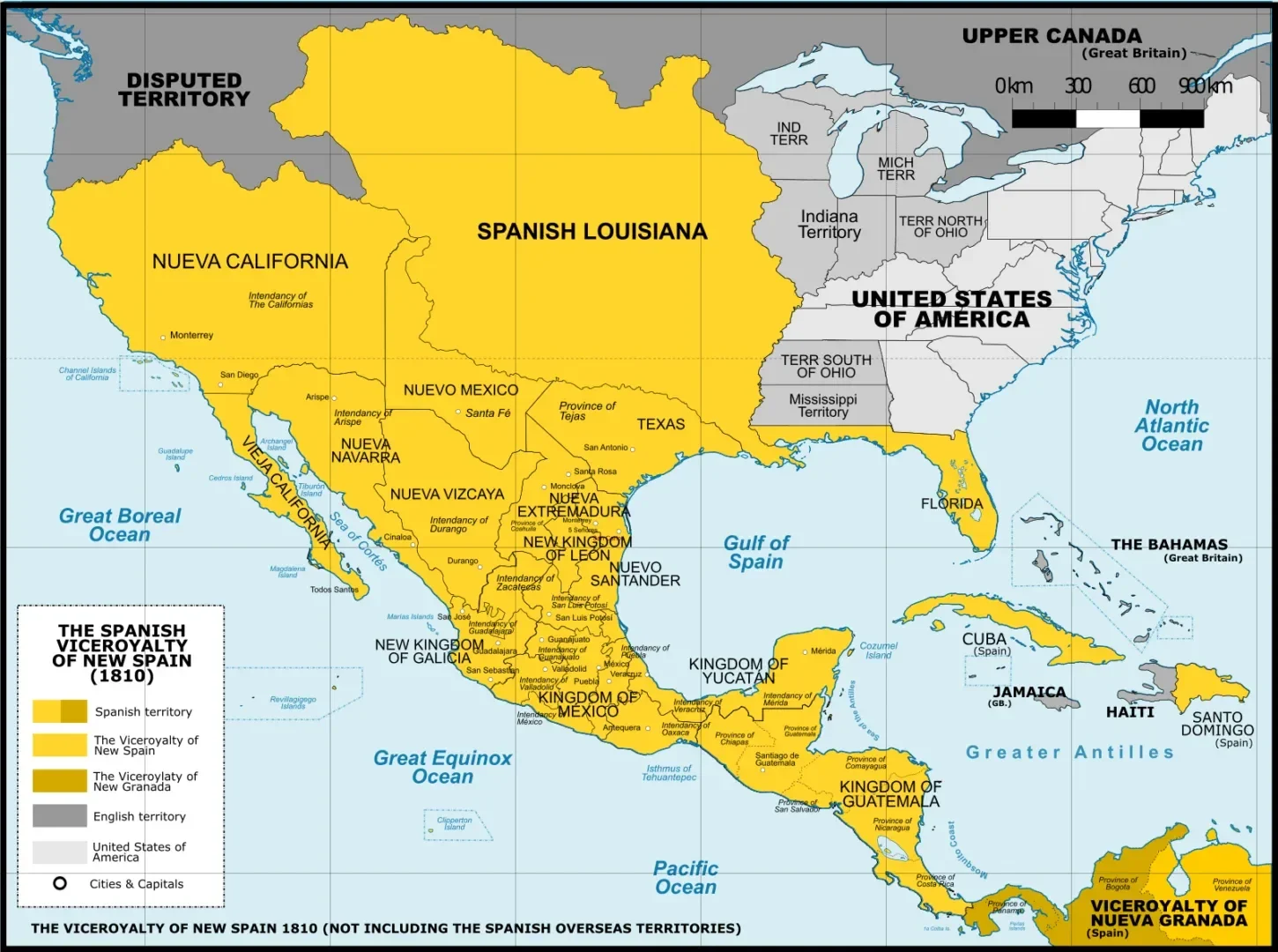
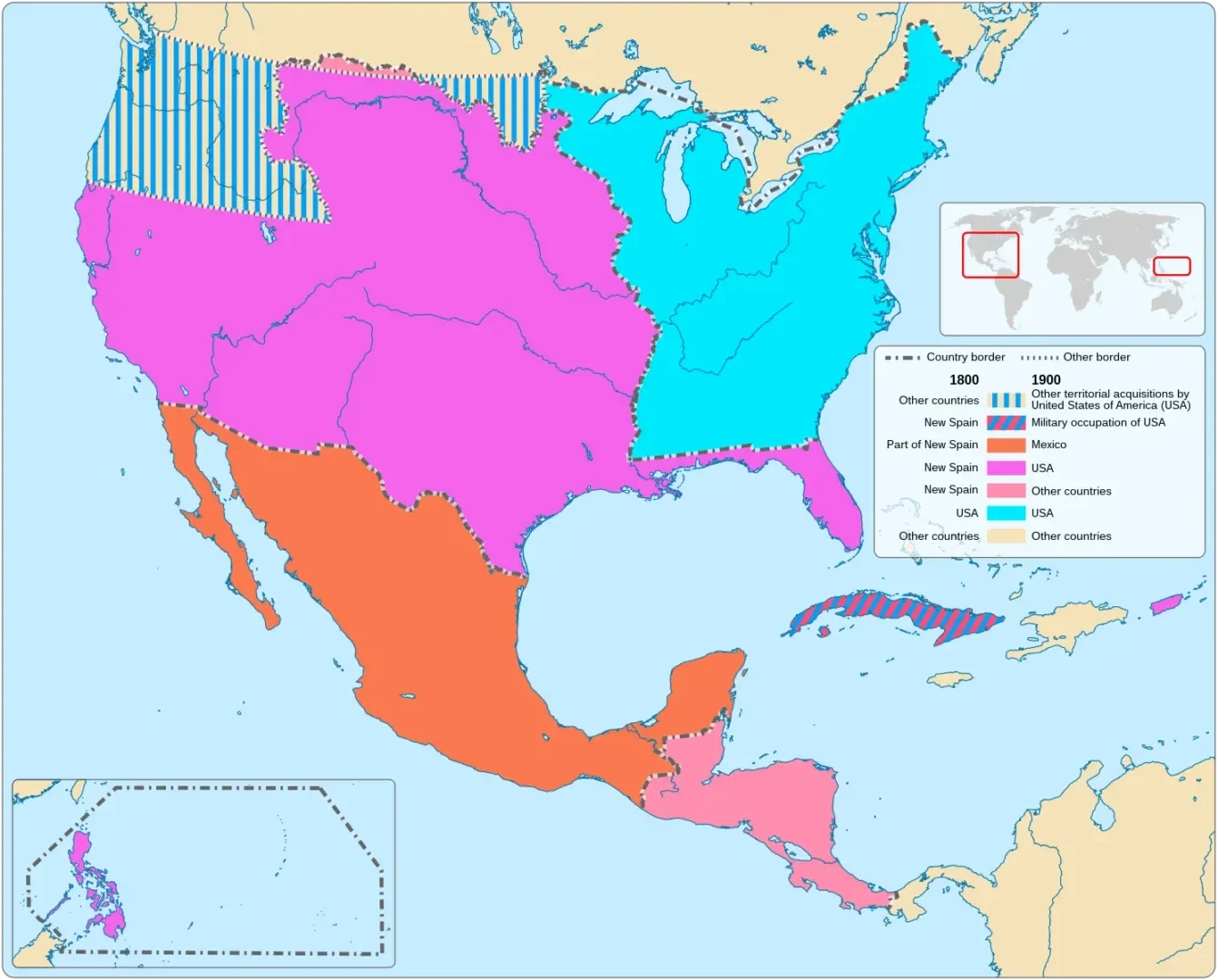
The maps above show the different territorial configurations leading up to the formation of the modern nation-state of Mexico: Mexica-Tenocha, Viceroyalty of New Spain, and the Age of Interventions.
Many cultures have influenced Mexico’s rich physical culture, and this extends to its various martial arts and combat sports (MACS) such as the famous lucha libre with its colourful masks and rich characters, its pedigree in professional boxing, medals in Olympic Taekwondo and, since the 1990s, the creation of several new martial arts in various states of Mexico that are inspired by the imagined pre-Hispanic past: SUCEM (an acronym for Mexican System for Unified Extreme Combat, founded in Veracruz), Pak-at-Tok (in Nayarit) , Tae Lama (in Puebla) and Xilam (in Mexico City and the State of Mexico).
The Neo-Aztec vision of Xilam
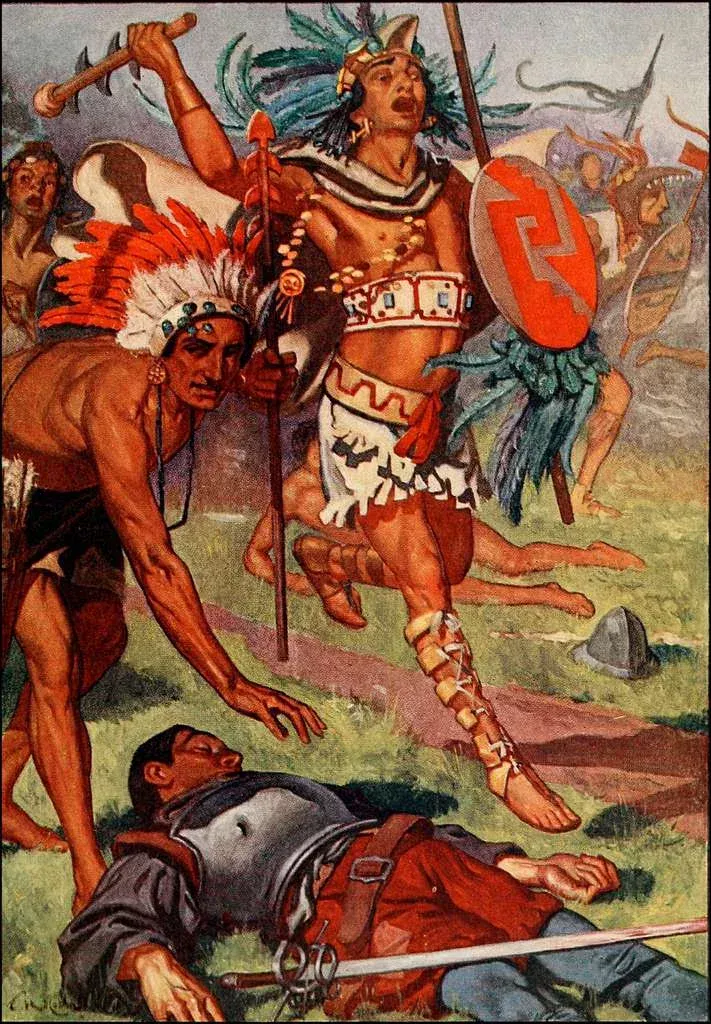
As the image indicates, there is artistic licence for remembering, imagining and depicting our warrior ancestors. Despite the Aztecs being defeated, one might regard them as being brave, fighting against armoured conquistadors with canon, firearms and galleons (not to forger diseases) that the pre-Hispanic people were unfamiliar with.
Xilam is a contemporary, philosophical martial art that follows a (neo)Aztec vision for the nation: one grounded in pre-Hispanic wisdom and accomplishments as well as current Indigenous games and lore. It is also inspired by two other warrior cultures: The Maya and the Zapotecan peoples, although much of the terminology and counting in class is done in Nahuatl language of central Mexico, where Xilam is largely practised (Mexico City and the State of Mexico).
Rare in the male-dominated world of martial arts, it was founded and registered (in the early 1990s) and is still led by a woman, Marisela Ugalde, who trained in numerous Asian and Pacific martial arts (including Kempo, Kung Fu and Lima-Lama) since her teenage years. During the time of the Mexico 1968 Summer Olympics, she was inspired to take up Judo in the YMCA. As the “mother” of Xilam, Ugalde continues to research ancient pre-Hispanic philosophy and culture and after period of tutelage under her mentor, the renowned conchero dance leader Andrés Segura Granados (Jennings, 2015).


In the images, representations of shapes and animals of symbolic importance in xilam.
It is largely concerned with hand-to-hand combat and the quest for belonging (Scandurra & Nardini, 2019), although it also contains some weapons sequences and drills using modern recreations of specific weapons such as the Aztec obsidian clubs. This focus on symbolic routine (e.g., moving according the points of the pre-Hispanic calendar) and ritual (using oral mantra for each motion of the foundational forms) makes Xilam differ from the Mexican combat sport SUCEM, which has full-contact combat with such weapons, and Pak-at-Tok, which stresses self-defence for vulnerable women and girls.
Each Mexican martial art appears to have been developed in relative isolation, with their own unique pedagogy, philosophy and vision – much like related meditative practices operating independently in specific parts of the country (Ibinarriaga Soltero, 2021). Interesting, although the arts were founded and are based in different states of the country, although, many of them are based on territory that was once part of the Aztec empire.
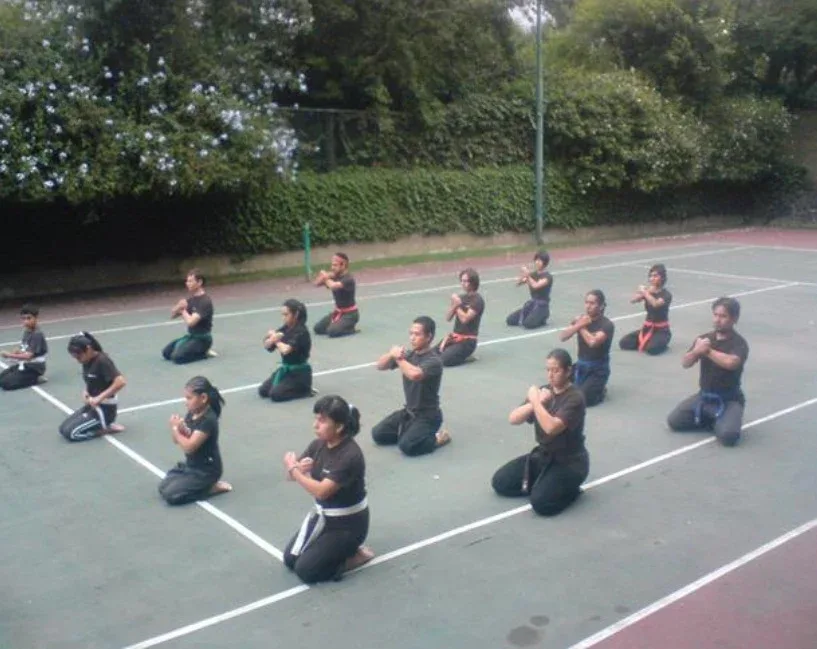
Being not overly concerned with sporting competition or self-defence, Xilam concentrates instead on the holistic development of its practitioners along the pillars of Aztec-centred philosophy, a warrior ideology, training specific virtues through a step-by-step pedagogy based on seven indigenous animals found in this region of the Americas: snake, eagle, ocelotl, deer, monkey, iguana and armadillo (see www.xilam.org).
In the images, Marisela Ugalde presents some animal postures used in xilam pedagogy.
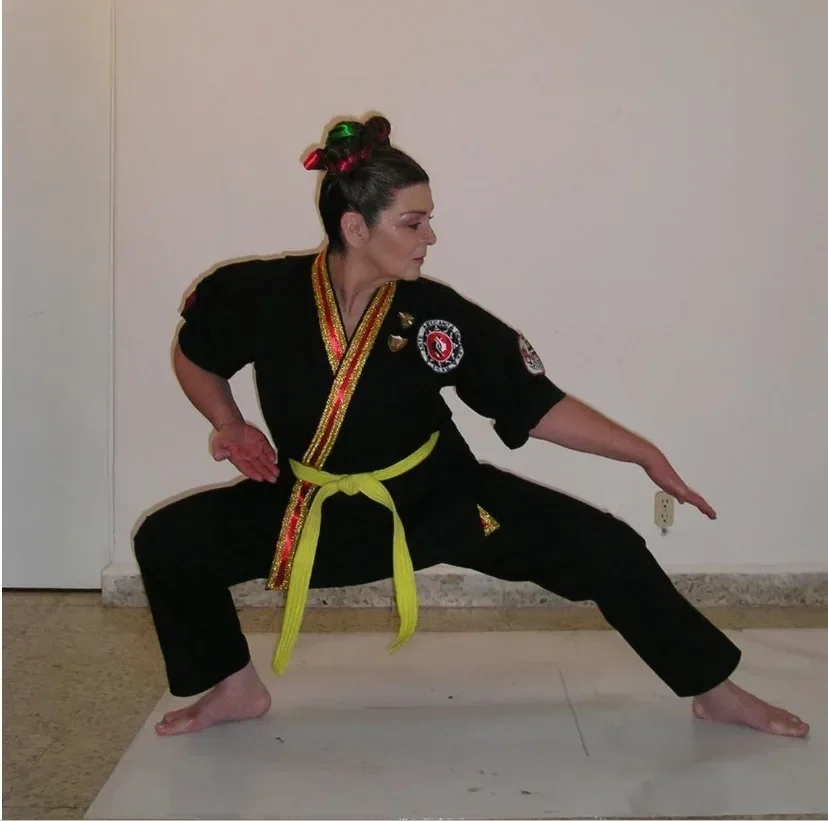
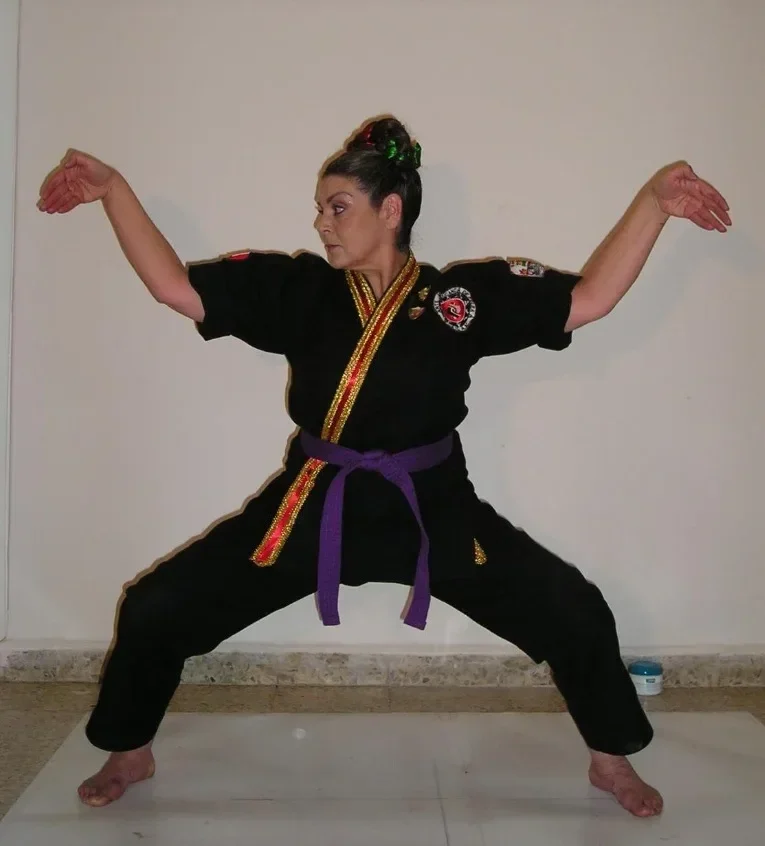
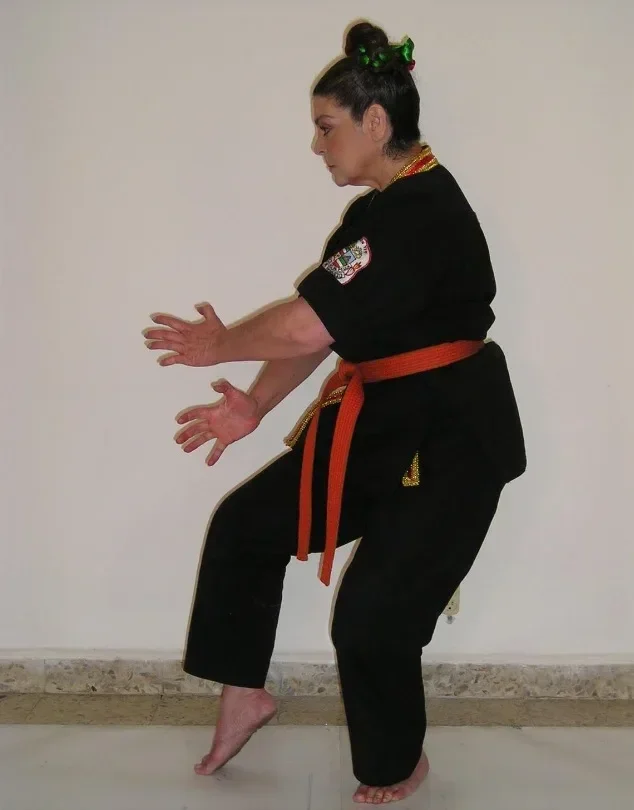
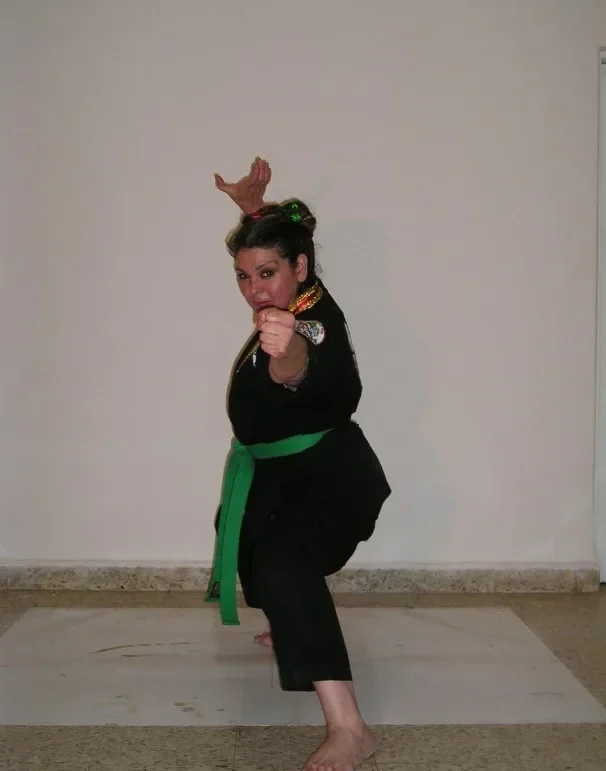
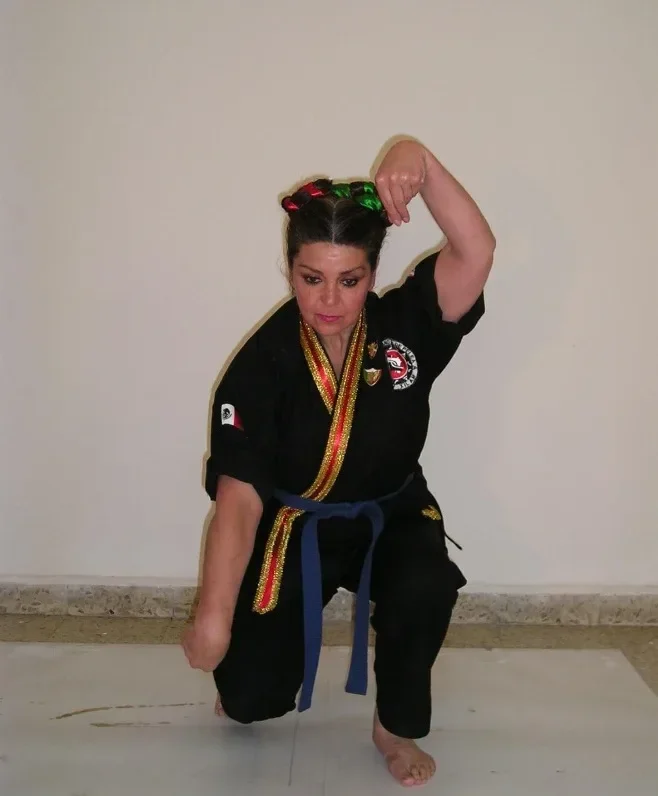
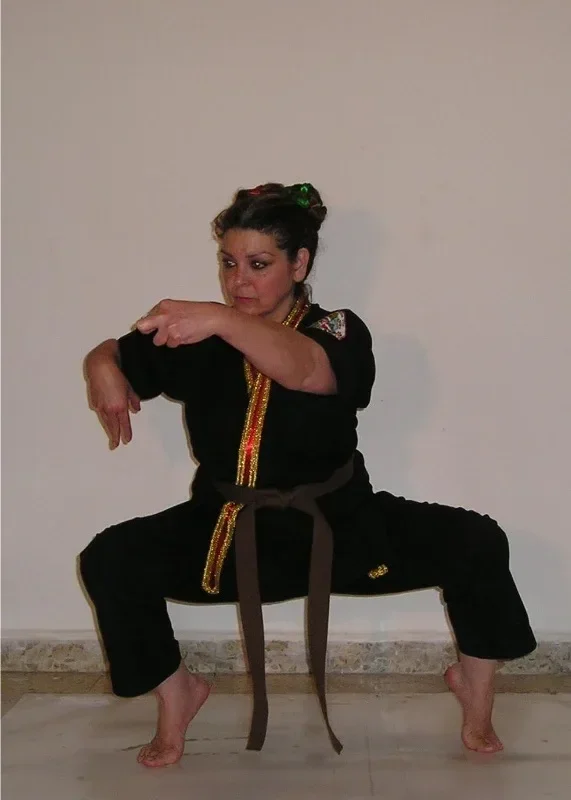
Belts (white to black) are awarded to students following successful gradings involving the demonstration of forms and the breakdown of specific movements and applications. These belts are ordered as in many Asian martial arts, while the uniforms themselves are black – plain back trousers and an official Xilam t-shirt. Each animal has its characteristic stance, form of hand position and defensive techniques that are stylised in the form of animals. For example, the snake stance is low and wide, with footwork using slithering, circular motions. The hand strikes include open-handed strikes to the throat using the fingertips, as in a snake snapping out.
Refashioned (and blunted) Pre-Hispanic weapons are only taught at advanced levels (deer, iguana and armadillo stages). The look techniques are fuelled by Marisela Ugalde’s continuous research into the Mesoamerican warriors through murals, pottery and visits to archaeological sites, while the philosophy is informed by the oral transmission from Andrés Segura.
The wide variety of techniques are mainly symbolic, with the three level of training including a four directional form, a multidirectional form and then application for self-defence. At present, Xilam does not feature competitions, although playful games are used to develop specific qualities such as agility and bodily control, as in for the monkey level. Students can still practise the stances and games for each animal before reaching the level of competence to learn the specific forms in question.
The sacred aspects of these animals are enacted through movement and specific games designed to train the qualities of each fantastic beast. These animals have symbolic importance in specific native cultures, as in the deer dance of Northern Mexico. Much of Xilam is ritualistic in nature, taking inspiration from surviving symbolic rites in Mexico such as the conchero dances, with its movement in directions of the pre-Hispanic calendar and the world-famous Día de los Muertos (Day of the Dead), with its symbols of the duality of life and death.
A decolonial (re)education project
I have previously argued that martial arts are developed by charismatic, experienced martial artist in moments of creativity following a common mixture of personal and social crises (Jennings, 2019), and they are often designed not just for very specific challenges in combat (close-range, grappling, armed and so on) but to deal with wider problems in society such as cultural expression and personal liberation (Jennings, 2023). I also contend that Xilam is in many ways is a decolonial project – that is, an activity that is designed to unpack a colonised mindset established in one’s education and upbringing, which has, until recent years, contributed to negative perceptions on Indigenous people who do not seemingly contribute to the modernising project of modern Mexico and the pre-Hispanic penchant for human sacrifice to a plethora of gods.
Admittedly, my informants did not use the term “decolonial” during my earlier fieldwork (2011-2016); however, since the time of the research project, the decolonial turn in social science might make us look at Xilam in such a light. Nonetheless, during the classes I attended, they did advocate reading the postcolonial anthropological text México profundo (Bonfil Batalla, 1994) while taking a seemingly decolonial viewpoint on Western colonialist epistemology and science within interview-based and personal discussions.
However, rather than being a purely theoretical and abstract project (as is common in decolonial camps in academia), Xilam could be described as a physical (re)education project that has a disdain for much western scholarship from a Northern, Western, white, Christian worldview. It wishes to promote pride in people’s Native Mexican heritage in a country still living with colonialist forms of racism where white people often experience better treatment (Navarette, 2016).
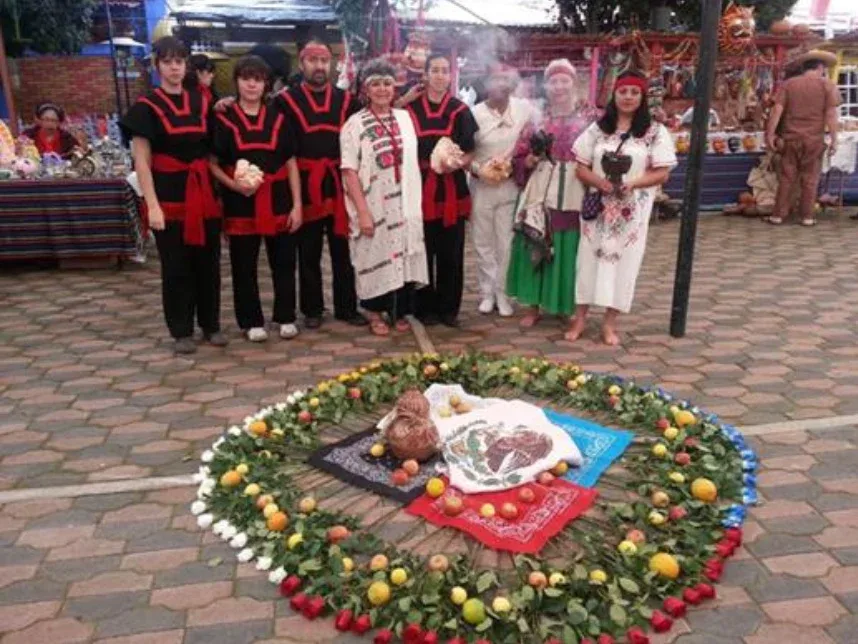
The martial art teaches the practitioner about Aztec worldviews and native languages (learning terms in Nahuatl, Mayan and Zapotec) due to its inspiration by the Aztecs (Mexica), Maya and Zapotecan cultures, who had their own warrior orders and traditions, as in the Eagle (cuahtli) and Jaguar (ocelotl) “knights” of the nobility of the Aztec Empire. The Xilam instructors teach the students that the four key deities Quetzalcoatl, Tezcatlipoca, Xipetote and Huitzilopochtli were not gods per se, but concepts of energy linking four specific elements and colours with the four seasons and periods of our lives. Some practitioners I studied with even adopted Nahuatl pseudonyms and pre-Hispanic images on social media, and they also spent much of their spare time reading about the Mesoamerican world, calling them to question the colonial (and continued colonialist) view on their ancestors.
Ancestry, DNA and "Mexicanidad"
Ancestry happens to be a crucial theme in Xilam, and senior students at the iguana and armadillo levels are encouraged to research into their heritage to learn about their origins and genetic potential. Many Mexicans have a substantial level of Native American DNA, which has historically been a discriminated group. With the growth of the genetic testing industry, Mexicans have found themselves to have a rich tapestry of human origins, quite often involving a balance of native Mexican, European (predominantly Spanish) and African ancestors (due to transatlantic slavery in New Spain).
Because of the complexity of DNA markers along the male and female parental lines and the variety of research designs, average results vary (Bodner et al., 2021), but a typical Mexican might expect to have something like 50% Indigenous, 45% Spanish and 5% African admixture in their DNA results, with the majority of Indigenous DNA from the maternal line. Averages of course vary according to the history of each region, with the south of Mexico being associated with more Indigenous ancestry, and the north being more related to recent European occupation.
This mixture is more complex than the simplified ideology of a pan-Mexico mestizaje (mixing) spearheaded by the post-revolutionary government in early 20th century (Gall, 2021). It is important to stress that DNA and culture are, of course, distinct things. However, most Mexicans are mestizo (mixed) in terms of genetics and culture, but they are not a simple 50:50 split between native Mexican and Spanish as often depicted in famous murals sponsored by the country’s military leaders (former generals turned president) during the first few decades following the revolution.
The group’s perspective on ethnicity is more akin to Mexican politician and philosopher José Vasconcelos’s (1925) controversial notion of the cosmic race: a new Latin American “race” born out of mixing of older civilisations coming together. Some people with high levels of Indigenous DNA speak no native tongues, while other white-passing, typically middle-class Mexicans might be unaware – and perhaps in denial – of their potential native ancestry. Other Mexicans hail from Asian (Chinese and the Philippines in particular) and Middle Eastern (often Lebanese and Syrian) backgrounds, among other ethnic groups who migrated in recent generations. However, they all live on land that was once occupied by first peoples – the group that the Xilam Martial Arts Association chooses to devote its efforts towards.
Although Xilam is a modern art with a living founder with some controversial technical resemblances to East Asian styles (e.g., the stances and coloured belt system), it is most certainly a very Mexican system of combat and human development: with a Mexican founder, a Mexican founding place of Mexico City and headquarters in the surrounding State of Mexico, pre-Hispanic stimulation, enactment of Indigenous language (namely Nahuatl, Maya and Zapotec) for counting and names of animals, native animals and symbols and inspiration from past cultures. It expresses one way of Mexicanidad – the quintessential sense of Mexicanness that might also be seen in other, alternative avenues of Mexican cultural life, as in graceful Mexican danza regional (folkloric dance), the comic lucha libre and romantic Mexican telenovelas.
There are many different Mexicos depending on one’s social class, economic resources, ancestry and mobility, but Xilam focuses on underappreciated ancient civilisation that runs underneath what Guillermo Bonfil Batalla (1994) called México profundo: Mesoamerica, as opposed to the official nation-state and its mestizo vision of national identity (Arredondo Ramírez, 2005).
George Jennings is Senior Lecturer in Sport Sociology at Cardiff Metropolitan University, Wales, UK. He has been researching a range of martial arts since 2004, including Wing Chun, Taijiquan, historical European martial arts (HEMA) and Xilam. George is a founding director of the Martial Arts Studies Association (MASA) and co-editor of Martial Arts in Latin Societies (Routledge, 2025). He also sits on the editorial board of Revista de Artes Marciales Asiáticas (RAMA). He lived in Mexico from 2011 to 2016.
References
Arredondo Ramírez, M. L. Mexicanidad versus identidad nacional. Mexico City: Plaza y Valdes, 2005.
Bodner, M., Perego, U. A., Gómez, G. E., Cerda-Flores, R. M., Rambalde Migiliore, N., Woodward, S. R., Parson, W. & Achilli, A. “The mitochondrial DNA landscape of modern Mexico”. Genes, 12, n. 9 (2021): 1453.
Bonfil Batalla, G. México profundo: Una civilización negada. Mexico City: Debolsillo, 1994.
Gall, O. “Mestizaje y racismo en México”. Nueva Sociedad, n. 292 (2021): 53-64.
Ibinarriaga Soltero, B. “‘Before mindfulness’: Decolonising meditative practices in Mexico”. Unpublished doctoral thesis, Cardiff University, 2021.
Jennings, G. “Mexican female warrior: The case of Marisela Ugalde, the founder of Xilam”. In A. Global perspectives on women in combat sports: Women warriors around the world, edited by Channon and C. Matthews, 119-134. Basingstoke: Palgrave Macmillan, 2015.
Jennings, G. “Bruce Lee and the invention of Jeet Kune Do: The Theory of Martial Creation”. Martial Arts Studies, n. 8 (2019): 60-72.
Jennings, G. Reinventing martial arts in the 21st century: Eastern stimulus, Western response. Oxford: Peter Lang, 2023.
Navarette, F. México racista: Una denuncia. Mexico City: Grijalbo, 2016.
Scandurra, G. e D. Nardini. “Hand-to-hand sports and the struggle for belonging”. Ethnography 22, n. 3 (2019): 289-294.
Vasconcelos, J. The cosmic race / La raza cósmica. Baltimore: John Hopkins University Press, 1925.
Xilam Martial Arts Association official website. Available at: www.xilam.org.
The images were provided by the author.