El Juego de Maní: Preserving the Hidden Warrior Art of Afro-Cuban Resistance
By Miguel Quijano
El juego de maní is not a dance, though it moves to the beat of drums. It is not a mere performance, though it can entrance crowds. It is a martial art born in resistance, surviving the sugarcane plantations of the Caribbean, and pulsing in the blood memory of African descendants in Cuba and Puerto Rico. Today, I stand not only as a practitioner but as the only certified master instructor of this tradition, having trained under the last true bearers of the art—Juan De Dios Ramos Morejón, Carlos Aldama, Alberto Pedro, and others who entrusted me with its preservation.
Origins and cultural foundation
El juego de maní is rooted in Central African traditions, particularly those of the Congo-Angola region, brought to the Caribbean through the brutal transatlantic slave trade. As Maureen Warner-Lewis describes in Central Africa in the Caribbean: Transcending Time, Transforming Cultures (Warner-Lewis, 2003, p. 90–95), African combat forms often carried dual meanings: they trained warriors while encoding spiritual, ritualistic, and cultural identities.
Fernando Ortiz, in Los bailes y el teatro de los negros en el folklore de Cuba (Ortiz, 1951, p. 259–270), identified maní as a form of mock combat practiced by Afro-Cuban slaves, often embedded in festive and ceremonial contexts. Ortiz viewed it as a ritual dance with martial elements, misunderstanding the depth of its strategic and combative essence. Argeliers León later reinforced Ortiz’s view but added insights into its rhythmic structure and musical accompaniment in Del canto y el tiempo (León, 1981, p. 203–208). However, both treated maní more as folklore than as a living martial system.
What they could not fully see was that maní is war disguised as play.
Period 1: The plantation and slavery game (from the beginnings to 1886)
During this period, which we will call Era 1, maní was played on Sundays, often a free day for enslaved workers on the plantation. They would play for fun and sometimes fight for a woman’s love. Sometimes the games were very brutal, and the slave owners would often bet on their players. Maniseros would often come from other plantations because their owners forced them to fight elsewhere. The fighters who lost, were often beaten brutally in these bouts. Leave the opponent bleeding was often the proclaimed goal and some contests ended with vicious knockouts.
Period 2: Maní in the cabildos and in street fights (1887-1960s)
This is the period from abolition to the 1960s, which we will call Era 2, when maní continues to by practiced by the brotherhoods of the Congo Nation and the Casas de Ocha (Palo Monte and Santeria religion shrines).
My teachers grew up in this era, although educated by their own teachers, fathers and family from Era 1, and this is what I was taught and what I am sharing in my description below. But before I share this description, let me explain some of the above terms.
Cabildos were mutual-aid organizations of slaves and free blacks and belonging to the same ethnic group or nación. Later this name was given later to the shrines in the Afro-Cuban religion Santeria.
Casa De Ocha, also known as Casa De Santo (or Ilé) is the shrine or temple, the basic social unit that groups the practitioners initiated by the same Godfather or Godmother.
In both the cabildos and Casa de Ocha, different occasions brought people together: marriage, death, birth, initiations, memorials, etc. During these events maní would often be played.
Period 3: Folkloric maní
In the 1960s, maní was adapted by a group of experienced maniseros to be performed on stage by the Conjunto Nacional Folclórico de Cuba (CNFC). It is from them that I learned mani in the 1980s and 1990s. This new era of folkloric maní we will call “Era 3”.
During salvery, maní was more than training – it was defiance. It taught enslaved Africans how to fight, escape, resist, and remain human. After abolition, it faded into cultural performances, often misunderstood as simple dance or folkloric show. That is where many saw it last.
The circle and ritual formation
Prior to the game, a ritual takes place to protect those in the game and circle. Palo symbols are drawn on the ground near the circle. Fruit, flowers, coconut, candle and rum are offered to the ancestors for protection. The game begins with two opposing groups singing and marching into the area where the game will take place. The leaders of the two teams carry long sticks (palo de mimbre).
The teams begin to form a circle, guided by the rhythm of the palo drumming and singing. They would interlock their legs with the person next to them to keep the circle tight and to keep the player in the circle from escaping. The circle is sacred, echoing the beliefs of Central African cosmology where time, spirit, and life move in circular rhythms. Entry into the circle is not random.
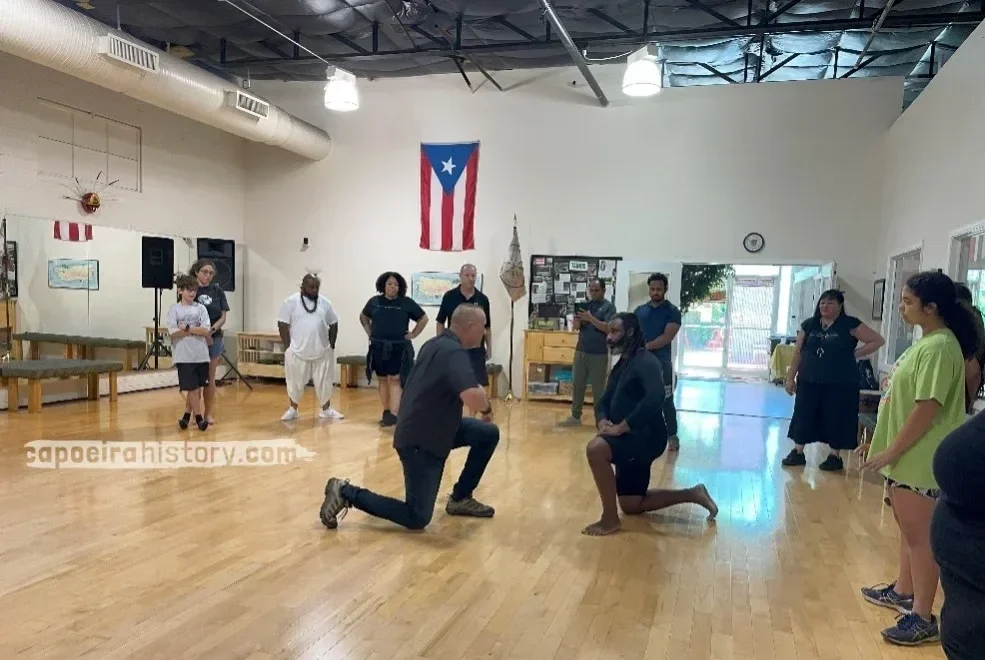
First, two conguerosos enter the circle in traditional garb (palm leave skirts and shirtless), they kneel and then stand facing each other. They then perform a ritual game called kokoyé, where they take turns in striking one another in an alternating fashion until one eventually falls. New fighters enter the circle and perform a salutation (un saludo de Congo) sometimes anointing themselves with the sign of the cross and stomping their feet (the base movement) to call upon the power of their ancestors. They will fight until one opponent is knocked down. A new opponent will replace the fallen player. If there is lull in the game and no one has yet replaced the fallen player, the single player will dance around the ring, randomly striking the players in the circle until one player comes out to take the place of the fallen player. During that time, those forming the circle will interlock their legs and defend themselves as the solo fighter goes around the circle striking at them and calling for a new fighter to come out. The games continue until there is only one player left standing.
Techniques and strategy
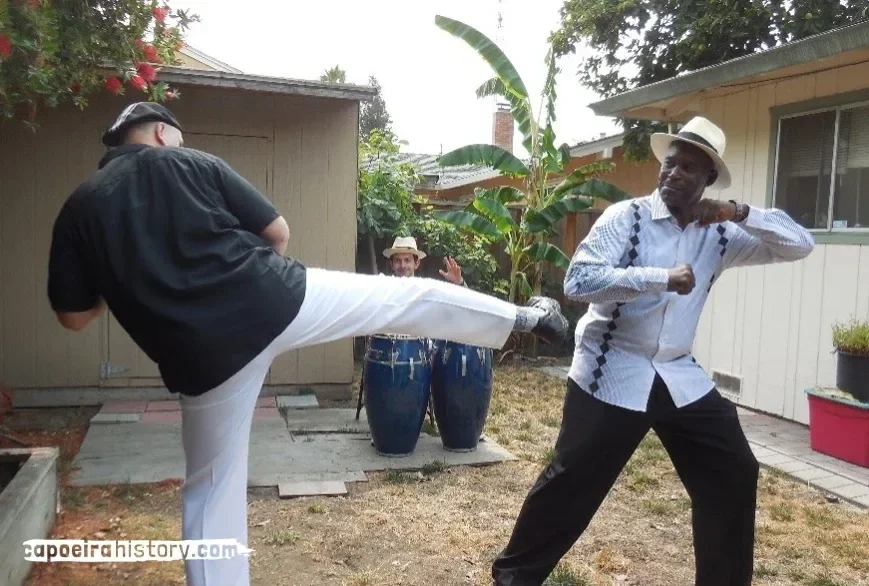
Maní is characterized by deceptive footwork, feints, sweeps, low kicks, strikes, headbutts, grappling and weapon play (with sticks and machetes). It uses rhythm to mask intent, fusing malícia (trickery) and agility to unbalance or strike an opponent before they can react.
Some key techniques include:
- Rajapuya (a strike used with the forearm);
- Amarrar la mente (to tie up the brain, a feinting movement);
- Golpes cruzados (corss-body strikes);
- El Martillo (the hammer strike);
- El Mono (a lowering of the body technique for evasion);
- Lucha (grapple, training and the game on the ground);
- Machetazos controlados (controlled blade cuts in training)
These techniques are not static. They respond to the rhythm, the opponent’s stance, the emotional energy in the circle. Practitioners must be fluid, calculating, and expressive.
One crucial component of maní is deception: hiding martial intent in musical and theatrical gestures. This allowed slaves to train openly without punishment, turning survival into celebration.
Rituals and symbols
Many former practitioners of the art were paleros (practitioners of the Palo religion). Therefore, they followed the many rituals of Palo. Before training, these practitioners would clean themselves spiritually with rum, smoke, or herbal baths. Songs are sung that call upon ancestral warriors, invoking strength, cunning, and spiritual clarity.
Each move has symbolic resonance. A strike to the chest is not just an attack, it is a call to attention. A dodge to the right may symbolize avoiding colonial control. Even the clothes worn (traditionally white or earth-toned) have meaning, drawing from Lucumí and Palo influences.
Fernando Ortiz noted the presence of talismans or makutos worn during games (Ortiz, 1951, p. 263). These were not ornaments but spiritual protections, often blessed by priests of Palo or Santería.
Ranking and initiations
In former times, for a student to become accepted by a teacher (maestro) he had to become a practitioner of the Palo religion. This implied that he had to go through an initiation procedure and become accepted. No lay person or person coming off the street could just walk in and begin to practice. There was always an interview, a small honorarium given to the teacher and an initiation ceremony. Elders in the arts who had been teaching for a long time had developed their own group of students. Their students would often teach the art as well. Therefore, these elders were called gran maestros a symbol of respect.
There was no other ranking system other than “student” (apprentice) and “teacher”. This was of course very different from hierarchies in Palo religion.
Individual teachers and students often wore a colored sash around their waste and a scarf (bandana) of matching colors to represent their Saint. That Saint was their protector. Many students and teachers were not only “paleros” (practitioners of Palo Monte) but also Santeros, and sometimes Abakuá practitioners as well. Abakuá is an all-male secret society of West African (Calabar) origins, known as the “Brotherhood of Carabali”.
Maestros and apprentices of maní
My experience was not one of observation only, it was by learning the art. Training physically, spiritually and mentally, day in and day out, year after year. Under Juan De Dios Ramos Morejón, I was taught the real game—the deadly combative version, which he knew from his years of fighting in the streets. But he also taught me to perform on stage, so I learned maní from the combative to the folkloric forms, including the drumming, the singing and the rituals.
Carlos Aldama showed me the link between drumming and footwork. He shared his own experiences of fighting in Cuba and Angola with Juan De Dios. Alberto Pedro, the brilliant Afro-Cuban playwright and historian, gave me insight into its dramatic structure and its role in identity preservation. His own personal experiences included fighting and observing Juan De Dios fight in the streets as well. All of them shared their experiences of fighting, religion, history and obstacles in life. Each of these men shared a similar curriculum with me, the same foundational techniques, but also their own experiences, adding to my knowledge.
Juan De Dios Ramos Morejon –“El Colo”
Juan De Dios Ramos Morejon was born March 8th, 1935 in Barrio Lawton, in Cuba’s capital Havana. Since a very young age, he often was involved in religious events (toques, bembe), learning rumba fundamentals and singing. His parents were also singers and musicians. They were very involved in their son’s education in the old African ways.
Juan De Dios was both an accomplished artist and practicing initiate of a spiritual lineage brought to Cuba by Africans during the slave trade. Later he became a founding member of and principal dancer of Conjunto Nacional Folklorico de Cuba (CNFC, Cuba’s first folkloric company created in 1961) and later on he started his own group, Raíces Profundas, which became another proeminent folkloric group in Cuba. Juan was also a santero and a babalawo as well as an Akpon (ceremonial singer) versed in Yoruba, Palo, Abakuá and Arará traditions.
Morejon was known throughout Cuba as a singer of religious songs. He was acknowledged as a living reservoir of the cultural treasures which came to Cuba from Africa and was also recognized internationally as the Gran Maestro of el juego de maní for his knowledge and experience in both folkloric and combative maní.
Carlos Lazaro Aldama Perez
Carlos Lazaro Aldama Perez was brought into the world in Havana in 1938. His mother was of African parentage, and his father was a blend of Chinese and African family lines. He was raised inside the Afro-Cuban, in particular Yoruba traditions and was perceived as a capable drummer from an exceptionally youthful age.
Carlos studied bata drumming under his teacher, Jesus Perez Oba Ilu (King of the People in Lucumi). Carlos was an Akpwon in Lucumi ceremonies of the Santeria religion. Carlos also later became co-founder of Conjunto Nacional Folklorico de Cuba, becoming the first musical director of CNFC.
Both Juan de Dios and Carlos Perez (whom I credit as my main teachers along with Rogelio Martinez Fure and Alberto Pedro, also members of the CNFC), prior to the formation were working with Fernando Ortiz, Lydia Cabrera, and Argeliers Leon. Both Juan and Carlos were being paid for information and for introducing these researchers to the art of maní, and helping to preserve and document African culture in Cuba. Their contribution became very important and led to the formation of CNFC and other folkloric dance groups. This was a way to preserve in some ways the sacred songs, the drumming and the dances for all types of people to enjoy. This format was developed for a more diverse type of crowd, unfamiliar with Afro-Cuban culture during the early years of the Castro regime in Cuba.
Some writers have on different occasions wanted to chime in and change the history. They claimed that Argeliers Leon was my teacher’s teacher. Although he worked with them and introduced them to the methods of preserving art such as music, dance, songs, he definitively was not their teacher in the art of maní. I need to clarify this. Originally, there were seven men who were well versed or who had knowledge in the art of maní before it became folkloric. They all worked with either Fernando Ortiz, or Argeliers Leon or even Lydia Cabrera, or all of them.
Both Juan de Dios and Carlos Perez traveled around the world, teaching dance, songs and drumming in workshops and whatever money they made, often was taken by the government. This new era of folkloric maní we will call “Era 3”.
Many folkloric groups today in Cuba are very well versed in Palo dancing, ceremonies and folkloric entertainment versions of mani, but don’t know and have no real training in combative maní. Nor should they be. They are dancers, not fighters. That is why the art is being lost today. Even in other areas, such as the sacred songs, the dances and drumming, the younger people are making new music. Fusion seems to be the new method of things. Many of the old timers, mostly men, have passed away. It is the elder women who are still alive, that are keeping most of the traditions for they are outliving the men.
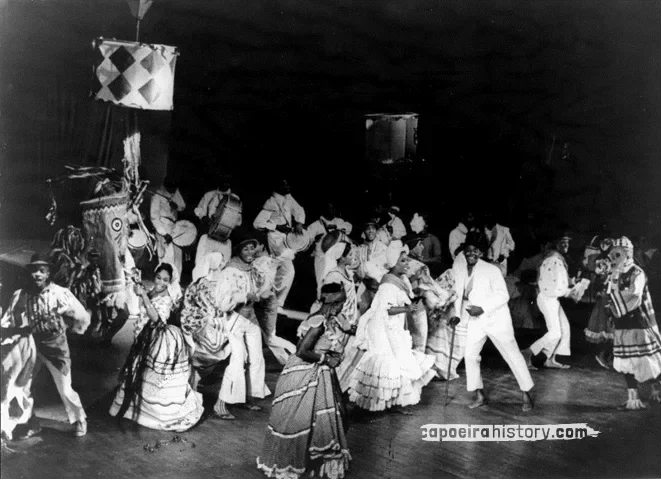
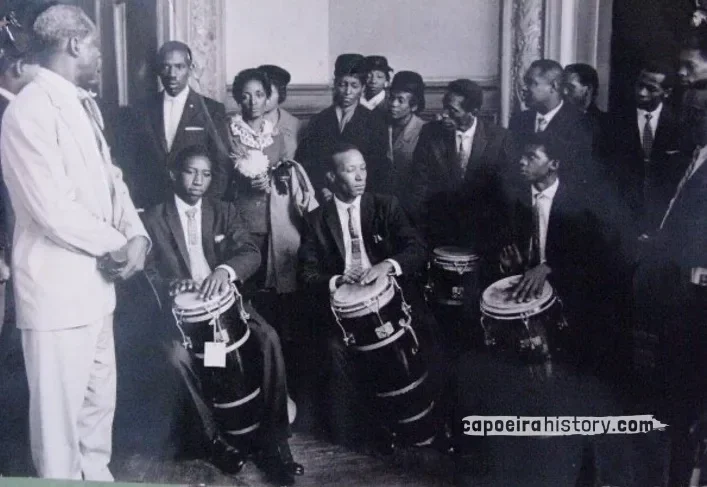
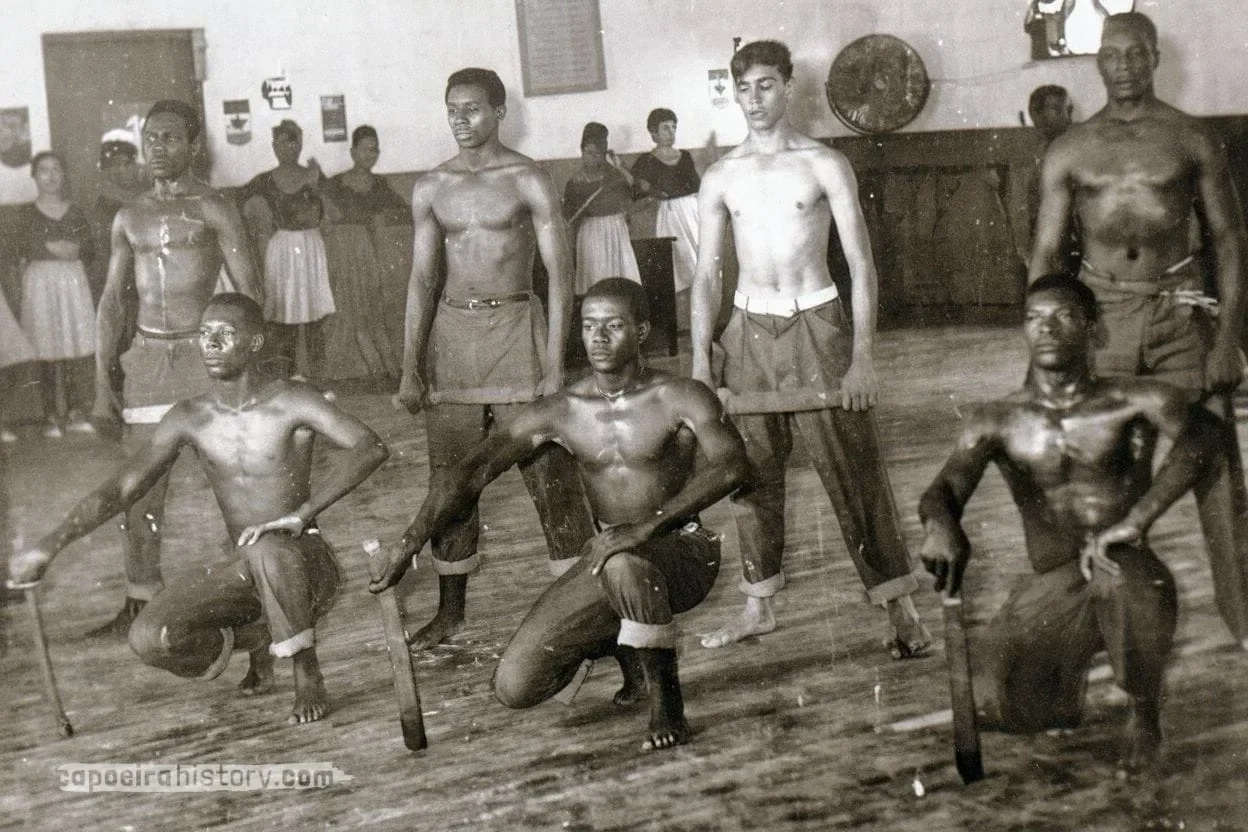
Many today in Cuba are more involved in making a living. Some are involved in learning Wu Shu (Kung Fu) boxing or Judo. Even Capoeira has started to be pracrticed in Cuba to a small degree.
Today, I teach the full combative and ceremonial sides of maní as well as cocobalé, ensuring it is not watered down for the stage. It is a living art, one with ethics, codes, and purpose.
Maní provides a missing link to the connection of the arts of Capoeira, Ag’ya (Martinique), Benadin (Guadeloupe) and Cocolembe (Puerto Rico).
El juego de maní today
In my group, Raíces Profundas Americas (which Juan De Dios personally named after his own group Raices Profundas) as an extension of his own group and family, we maintain traditional training forms while integrating structured methods for students worldwide. We use:
- Traditional paired sequencias (partner drills both unarmed and armed);
- Exercícios tradicionais de trabalho de pés;
- The full curriculum of strikes, defenses and grappling;
- Blade and stick awareness: anatomy-based targeting, redirection;
- Drumming, history, religion, etc;
- Songs and prayers (oraciones): maintaining the oral and spiritual lineage connections.
Maní is not about domination. It is about expression, survival, identity, and respect. The same hand that strikes can also lift. The blade that cuts can also prepare food. The foot that sweeps can also dance.
Watch the video:
El Juego de Maní shows a little of Miguel Quijano’s classes with his Master Juan de Dios, as well as the workshops with his students.
Conclusion: Carving the truth
This article serves as both tribute and testimony. The foundational contributions of Fernando Ortiz (1951) and later Argeliers León (1974) remain invaluable in documenting Maní as an Afro-Cuban practice, preserving critical insights into its music, ritual, and performance contexts. Yet it must be emphasized that maní cannot be fully grasped through observation or ethnographic description alone. It is an embodied tradition—sustained through lived apprenticeship, disciplined practice, and the deep interplay of rhythm, movement, and song.
The continuity of maní has historically depended upon oral transmission and direct training. My own teachers, Juan de Dios Ramos Morejón and Carlos Lázaro Aldama Pérez, represented the last generation to preserve both the folkloric and the combative dimensions of this tradition. Under their guidance, I was initiated not only into the martial and performative aspects of Maní, but also into its ceremonial and spiritual dimensions, including the traditions of Palo. In this sense, I remain the only student alive today to have received and carried forward the complete body of knowledge entrusted by them.
In recent years, however, a number of individuals have begun presenting themselves as masters or guardians of maní without undergoing the necessary apprenticeship or experiencing its lived demands. These risks fragmenting the art, reducing it to mere spectacle or stylization. To distinguish between performance and inheritance is therefore essential: maní is not simply a dance to be displayed, but a discipline rooted in responsibility, sacrifice, and truth.
The task today is not merely to replicate gestures, but to safeguard maní as a coherent system of embodied knowledge. Its survival depends upon those who, like the generations before, commit themselves to carrying it forward with fidelity rather than distortion.
To learn more, study with us, or preserve this legacy: https://www.facebook.com/raicesprofundasamericas.
Gran Maestro Miguel Quijanois a retired U.S. Army veteran and former police officer who trained with the last living masters of Cocobalé and El Juego de Maní in Puerto Rico, Cuba, and the U.S. Certified by maestros such as Juan De Dios Ramos Morejón and Carlos Aldama, he now leads Raíces Profundas Américas and has authored books preserving these traditions.
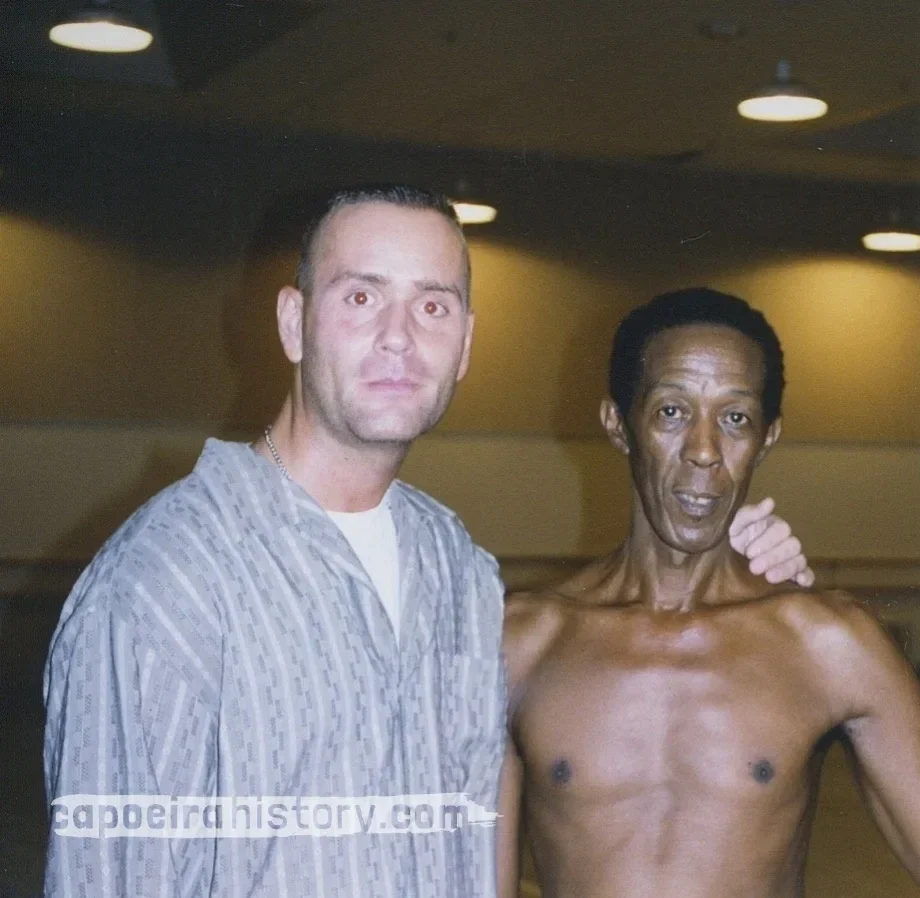
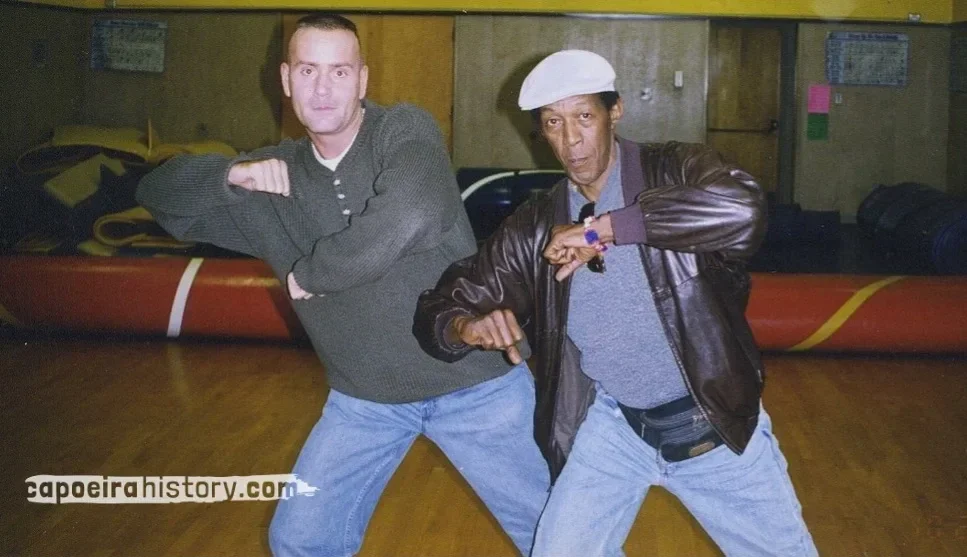
In the photo, Miguel Quijano and his late teacher Juan De Dios, 1996 (Author’s collection).
References
Ortiz, Fernando, Los bailes y el teatro de los negros en el folklore de Cuba. Havana: Editorial Letras Cubana, 1951.
León, Argeliers, Del canto y el tiempo. Havana: Editorial Pueblo y Educación, 1981.
Warner-Lewis, Maureen, Central Africa in the Caribbean: Transcending Time, Transforming Cultures. Mona (Jamaica): University of the West Indies Press, 2003.

Great article! I loved the video. Miguel is keeping these historical treasures alive. Through his efforts and dedication, he has risen to be an icon in the space. I have read many of his books. Kudos!
thanks for your comments, Drew! So you know Miguel personally – have you taken workshops with him?? Would you like to comment on your experience?
Hello Assuncao:
Thank you for your response. Indeed, I have known Maestro Quijano for 38 years. I received my Black Belt in USA Goju from Maestro Quijano and have attended countless seminars of his, over the decades. I consider him one of the finest instructors of martial arts that I know. His style is patient and he is always ready to offer refinements to attendees/students in a manner that encourages both learning and passion for the art. I would energetically suggest attending a workshop of Maestro Quijano’s, to any novice or accomplished martial artist. You will leave his seminar with Martial Arts “Diamonds” added to your mosaic of skills.
Dear Drew, thank you for that endorsement of Maestro Quijano. This is very important and helpful for our readers.